
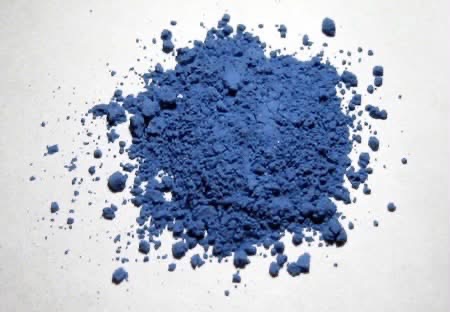
Today, we take colour for granted as part of artistic creation. A few centuries ago, however, producing certain pigments required sophisticated technical knowledge, lengthy work and considerable expense.
One of the clearest examples is natural ultramarine. This deep blue pigment, extracted from lazurite, was among the most valuable materials used by European painters for centuries.
From Afghanistan to European Workshops
The pigment’s journey began in the remote Badakhshan region of Afghanistan. Mountain mines there yielded the semi-precious stone lapis lazuli, which contains the blue mineral lazurite.
The stone reached medieval Europe along lengthy trade routes, often through Venice. The name ultramarine derives from a Latin expression meaning “from beyond the sea”, but the long journey was only one reason for the pigment’s high price.
How Stone Becomes Pigment
Lapis lazuli contains many other minerals, so simply grinding it produces a less intense colour affected by impurities. Around 1400, the Italian painter Cennino Cennini described a method of producing ultramarine in detail in his treatise Il libro dell’arte.
The crushed stone was mixed with resin, mastic and wax to form a uniform paste. After letting it rest, craftsmen kneaded it in a warm alkaline solution, from which they then separated the blue pigment. The process was repeated several times, yielding material of a different quality with each extraction.
The first batches yielded the richest and purest blue. Later batches contained more impurities, while the final fractions were considerably paler, with a greyish hue. The same stone thus produced pigments of different qualities and values.
A Colour More Valuable Than Gold
At certain periods in history, the finest natural ultramarine was so expensive that its value by weight could exceed even that of gold.
One particularly revealing record of its price survives in the notes of the German artist Albrecht Dürer. While visiting Antwerp in 1521, he exchanged works of his own valued at 12 ducats for one ounce of good ultramarine.
This was a substantial sum, revealing how much a single painting pigment could matter. Unsurprisingly, its use was sometimes specified separately in painting commissions. An expensive pigment called for economic as well as artistic decisions.
Raphael’s Painting Technique

Ultramarine was especially prized in religious painting. It was often used for the Virgin Mary’s mantle, its rich blue emphasising her special significance. Yet using an expensive pigment did not always mean applying it thickly.
Raphael’s 1505 altarpiece, the Ansidei Madonna, held at the National Gallery in London, offers an intriguing example of painting technique. Scientific research has shown that Mary’s mantle was painted using two different blue pigments. Azurite was used for the lower layer, with a thin layer of almost pure ultramarine applied above it.
This technique produced a rich, deep blue by drawing on the different properties of both pigments. It is a reminder that Old Master painting was shaped not only by artistic imagination, but also by a thorough understanding of materials.
Vermeer and the Luxury Hidden in Shadows
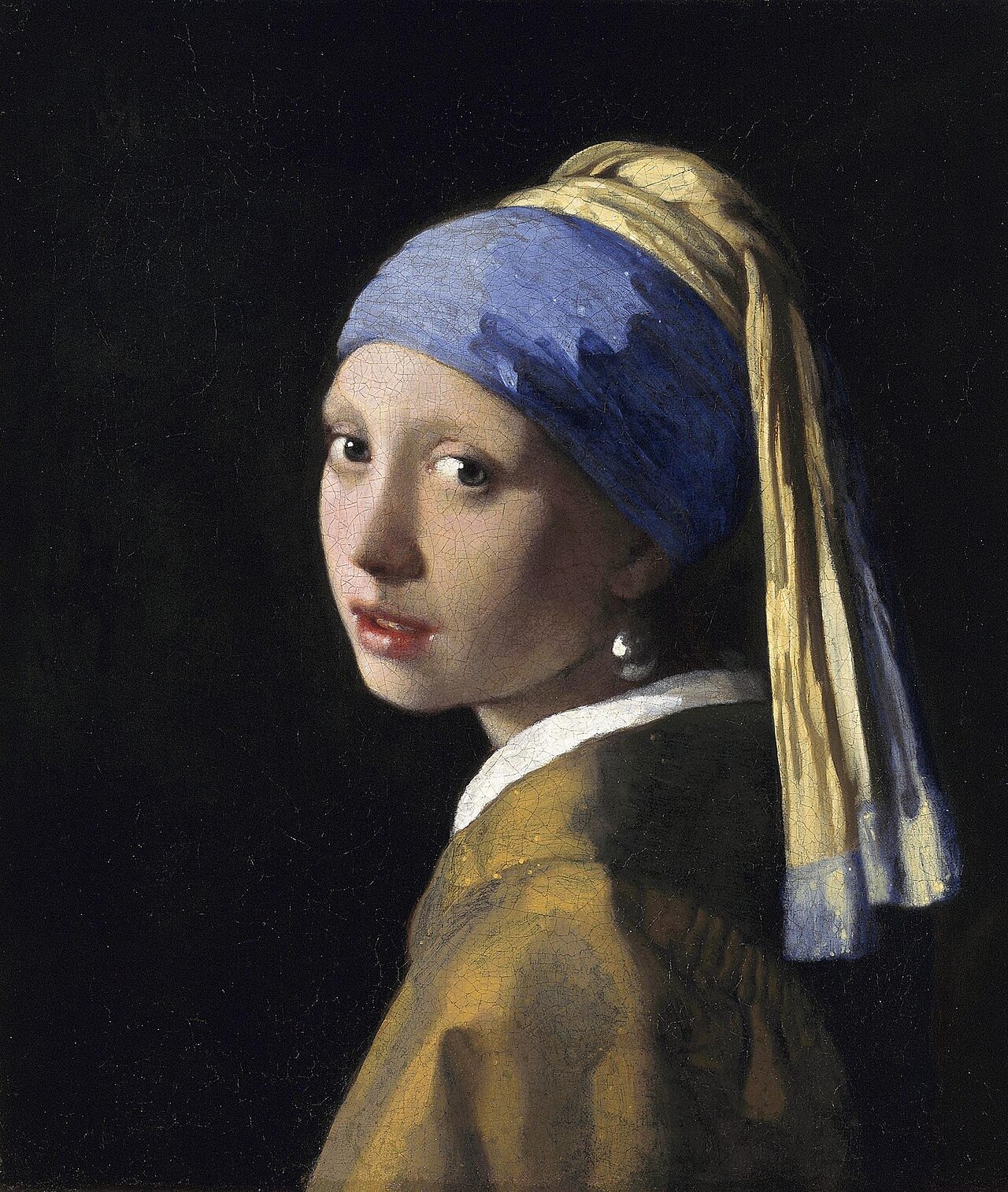
In the seventeenth century, the Dutch painter Johannes Vermeer was particularly fond of natural ultramarine. One of his most celebrated works, Girl with a Pearl Earring, painted around 1665, is now held at the Mauritshuis in The Hague. Scientific investigations in 2018 offered fresh insights into its materials and painting technique.
The girl’s blue headdress was found to combine different layers of paint. In lighter areas, ultramarine was mixed with lead white; darker areas employed dark underlayers and transparent blue paint. An even more intriguing discovery emerged from the study of her yellow jacket: specialists found that Vermeer had used ultramarine even in its shadows.
The costly blue pigment was mixed with other colours to create subtle tonal transitions.
Another unexpected discovery lay behind the girl. Today, the background appears almost black. Research revealed, however, that it was originally dark green, with faint folds of fabric. Vermeer used a transparent paint layer containing indigo and yellow plant-based dyes. Over the centuries, these materials changed and faded, causing the background to lose its original colour and some of its detail.
The painting we admire today is not quite the same as the one its creator once saw.
What Do We See in the Museum Today?
When synthetic ultramarine entered production in the nineteenth century, rich blue became far more accessible. For centuries, however, the natural pigment had been an expensive material connecting distant mines, trade routes, complex craft processes and an artist’s intentions.
When we look at a work of art today, we usually notice its subject first. To understand it more fully, it is worth looking deeper—at the artist’s chosen technique, the materials used and the creative process itself.
Sometimes these details, invisible at first glance, reveal as much as what we see on the canvas.