
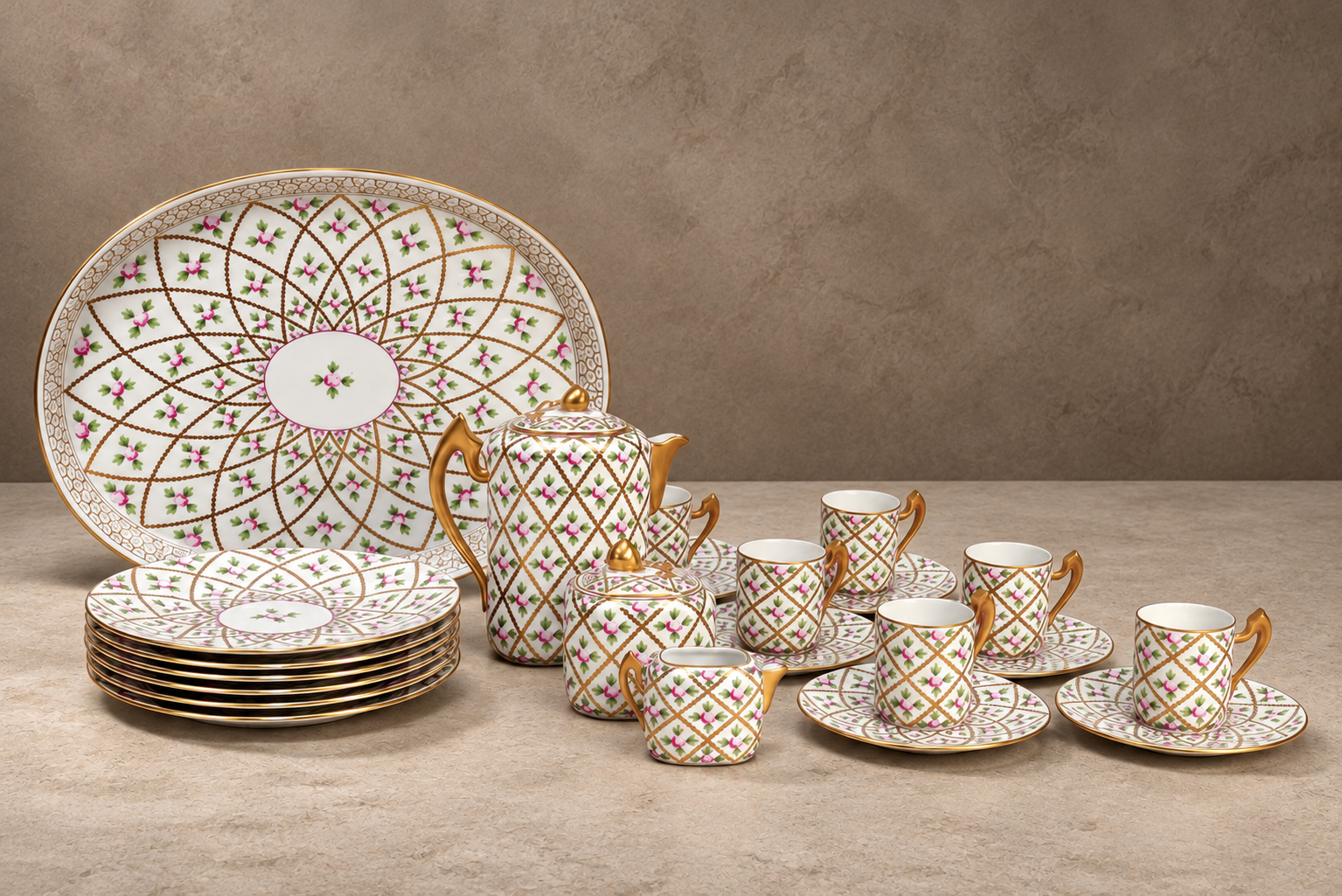
When European porcelain is discussed, Meissen, Sèvres and Vienna often come to mind first. Yet the story of Hungary’s manufactories reveals a different porcelain world—more colourful and daring, and closely tied not only to aristocratic tables but also to architecture, technological experiments and an emerging national culture.
Three manufactories tell this story particularly well: Hollóháza, Herend and Zsolnay. Their development, creative directions and methods of production differ markedly. Hollóháza represents the oldest local tradition; Herend became renowned for its meticulously hand-painted porcelain; and Zsolnay for unusual glazes, technical innovation and works that changed the appearance of Hungarian cities.
Porcelain in an Age of Aristocracy and Change
Nineteenth-century Hungary was part of the Habsburg monarchy. The palaces of wealthy aristocrats held services from Meissen, Vienna, Sèvres and other prominent European manufactories. Porcelain signified more than luxury: it reflected a family’s position, taste and links to European culture.
Local manufactories initially had to compete with established German, Austrian and French makers. They soon recognised that their future lay less in imitating mass production than in making distinctive objects requiring extensive handwork and technical knowledge.
Several paths in Hungarian ceramics emerged in this setting. Some manufactories preserved hand-painting and historical patterns, while others experimented with materials, glazes and modern design.
Herend: Porcelain Made by Hand
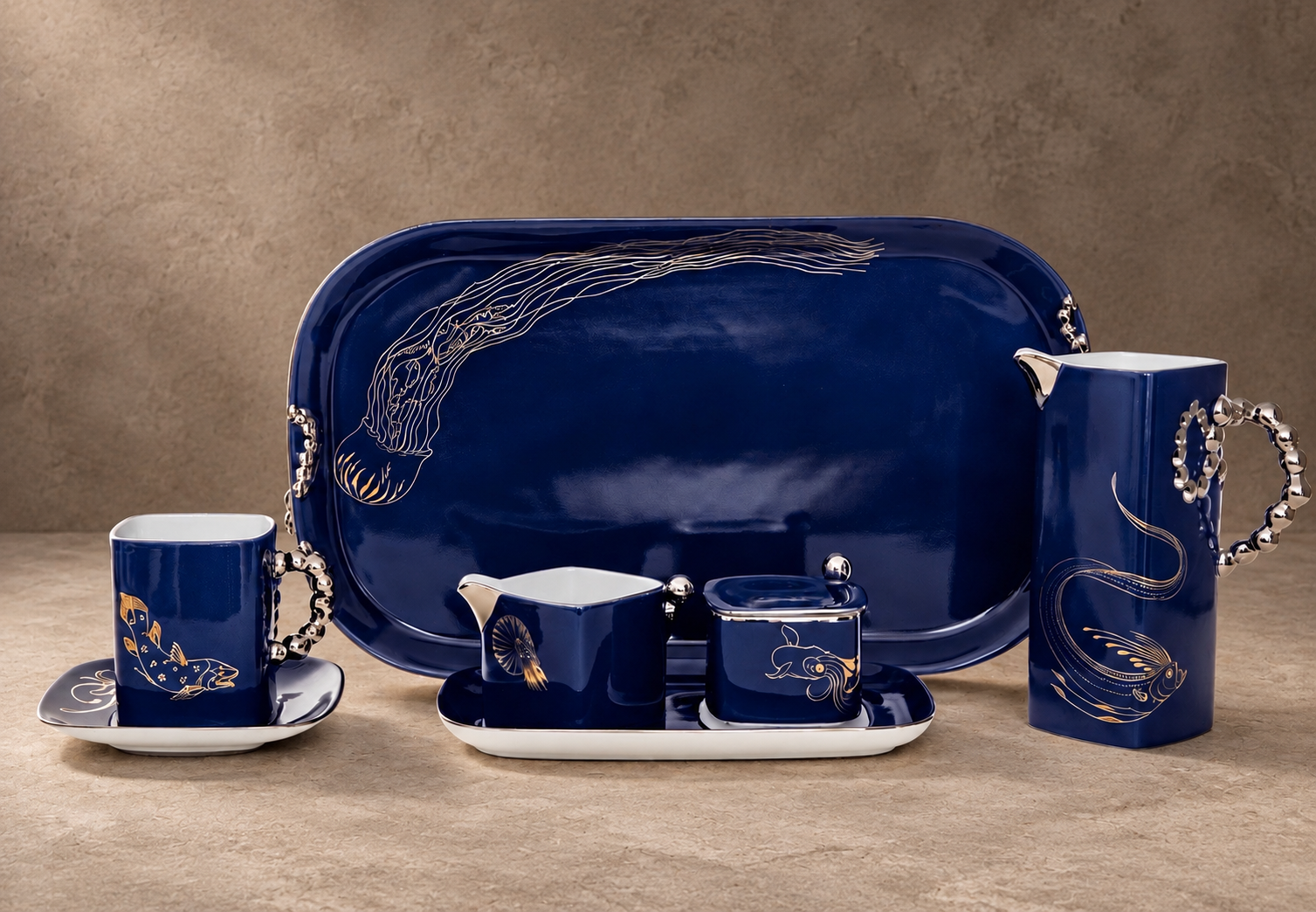
The Herend manufactory was founded in 1826 in the small town of Herend near Lake Balaton. Vince Stingl is considered its founder, but the decisive change came in 1839, when Mór Fischer took charge.
At first, Fischer’s workshop made replacement pieces for older aristocratic services. One of its early important commissions was to complete an eighteenth-century Meissen service for the Esterházy family. This demanded technical knowledge and a precise understanding of the forms, colours and painting styles of different manufactories.
That experience shaped Herend’s direction. Rather than producing simple everyday tableware, the manufactory concentrated on small quantities, handwork and artistically demanding commissions.
International recognition followed at the Great Exhibition in London in 1851. Queen Victoria ordered a colourful service displayed there, inspired by Chinese motifs with flowers and butterflies. The pattern named after her remains one of Herend’s best known.
The Habsburg court and many European aristocratic families later became Herend clients. Fischer was named a supplier to the Imperial and Royal Court in 1872. Numerous patterns took the names of patrons, including Esterházy, Rothschild, Apponyi, Waldstein and Liechtenstein.
Patterns Where East and Europe Meet
No single shape or colour defines Herend. Its character lies above all in the way pieces are decorated: fine hand-painting, gold details and variations in motifs that make even objects from the same series slightly different.
Many Herend patterns drew inspiration from Chinese and Japanese porcelain. Yet East Asian motifs were not simply copied. They were reworked for nineteenth-century European tastes: compositions became freer, colours more decorative, and plants, birds and insects were paired with Western vessel forms.
The Apponyi pattern is among the most restrained. It grew from a stylised Indian floral motif, later simplified for a commission from Count Albert Apponyi. A small flower, surrounding leaves and gold ornament create a composition that is recognisable without feeling crowded.
The Rothschild pattern is quite different, with birds perched in branches, insects and small scenes from nature. Victoria stands out for its rich colours, butterflies and flowering plants. These patterns reveal an important quality of Herend: its ability to combine aristocratic luxury with playfulness.
Zsolnay: Ceramics as Experiment

The Zsolnay story began in Pécs in 1853, when Miklós Zsolnay established a ceramics factory. A decade later, his son Vilmos took over. Under his leadership, it became an internationally known centre of art and technological experimentation.
Zsolnay and Herend can only be compared up to a point. Herend is associated mainly with thin, white, hand-painted porcelain, while Zsolnay worked with a much broader range of materials and techniques. It made decorative ceramics, faience, stoneware, porcelain and architectural elements.
Not every object casually called “Zsolnay porcelain” is technically porcelain. The name is often used for the manufactory’s entire output, although materials and methods vary greatly from one work to another.
Zsolnay’s production spanned historicism, Art Nouveau, Art Deco and modernism. Artists, sculptors and architects worked with the manufactory, so its history reflects a broader development of Central European applied arts, not just tableware.
A Zsolnay retrospective at the Bard Graduate Center presented more than two hundred objects spanning roughly a century and a half of technical and stylistic change.
Eosin: Colour That Changes in the Light
Zsolnay’s most famous technical achievement is its eosin glaze. It came into use in the final decade of the nineteenth century, with the first successful pieces appearing around 1893.
The name refers to Eos, the Greek goddess of dawn. The rosy sheen of early pieces recalled sunrise, but eosin later developed a much wider range of colours, from green, blue and violet to copper and gold. Depending on the light and viewing angle, a surface can resemble metal, glass or silk.
Eosin was particularly suited to Art Nouveau. Flowing plant forms, stylised figures and a shifting glaze made ceramics appear almost alive. These objects are valued for their complex, not entirely predictable process of production as well as their decorative appeal.
Light is the best way to understand Zsolnay. A piece that looks dark green from one side may flash purple or copper when turned. A photograph captures only part of this effect.
From the Vase to the City
Another important Zsolnay innovation was pyrogranite. This architectural ceramic, resistant to frost and weathering, entered production in the 1880s. It was used for façades, roofs, sculptural details and ornament.
Zsolnay ceramics became integral to Hungarian Art Nouveau architecture. They adorn Budapest’s Great Market Hall, Matthias Church and many other buildings. The manufactory worked with leading designers, including Ödön Lechner, an architect of Hungary’s national Art Nouveau style.
Zsolnay’s legacy therefore exists on two scales. One part—a vase, bowl or sculpture—can be held in the hand. The other can only be seen by looking up at a building’s façade.
Hollóháza: The Oldest Tradition
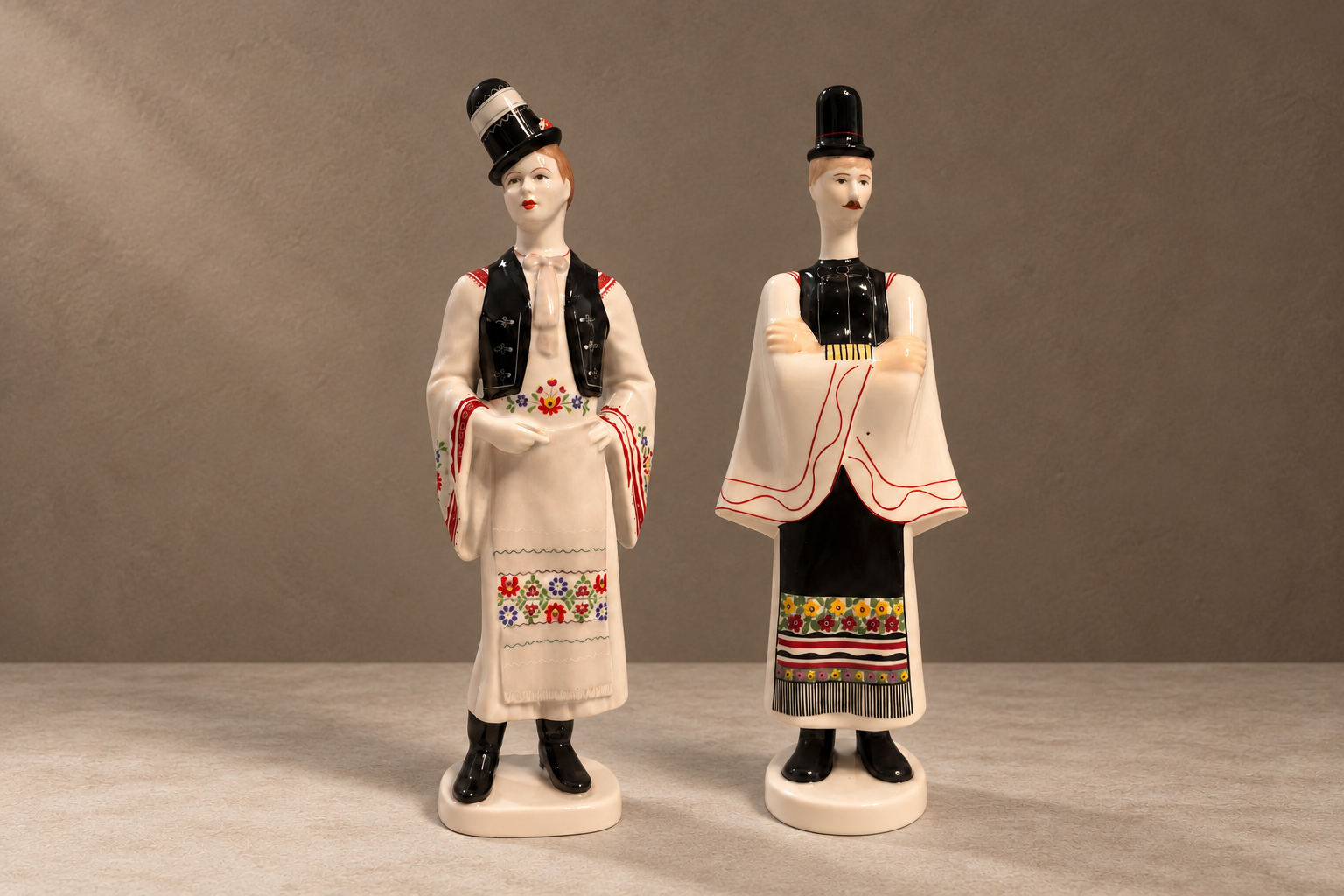
The story of Hungarian porcelain extends beyond Herend and Zsolnay. Hollóháza, based in the north-east of the country, traces its beginnings to 1777.
It began as a glassworks. Local raw materials later enabled the production of ceramics and, eventually, porcelain. Over time, Hollóháza became one of Hungary’s oldest manufactories still in operation.
Hollóháza’s works often belong more closely to the twentieth-century traditions of everyday porcelain, modern table services and stylised figures. Alongside classical patterns, the manufactory made vessels, figurines, vases and interior objects in more restrained modernist forms.
The manufactory’s importance lies beyond the splendour of individual pieces. Hollóháza shows how porcelain gradually moved from aristocratic palaces into a wider everyday setting and became part of Hungary’s domestic and design culture.
Three Faces of Hungarian Porcelain
Hollóháza, Herend and Zsolnay tell three different stories.
Hollóháza represents continuity. Its history brings together early local craftsmanship, industrial production and twentieth-century design. Over time, its porcelain became more closely woven into everyday life.
We often recognise Herend by its white porcelain, precise painting, gold and rich historical patterns. These objects are linked to table culture, aristocratic commissions and skills passed from one generation to the next.
Zsolnay is recognisable by colour, glaze, sculptural form and a bold approach to materials. Its works often stand at the intersection of ceramics, sculpture, design and architecture.
Herend sought perfection by repeating and subtly adapting historical patterns. Zsolnay explored new possibilities of material. Hollóháza maintained a long tradition of production while adapting to changing lives and tastes.
These manufactories differ, but share respect for materials and human skill. Even as production became more modern, the maker’s hand remained an important part of the work.
Porcelain with a Character of Its Own
The story of Hungarian porcelain is more than a list of manufactories, dates and patterns. It is the story of a country that found its own voice in European decorative arts rather than trying to surpass Meissen or Sèvres by their own rules.
In Herend porcelain, that voice is heard in the precision of the painter’s hand and the continuity of historical motifs. In Zsolnay ceramics, it emerges through colour, experiment and the transformation of material. In Hollóháza’s work, it lives in a long local tradition of production and design made for daily life.
Perhaps that is why the finest Hungarian pieces do more than decorate a room. They change with the way we look at them—from near or far, in daylight or evening light, as historical witnesses or simply as beautiful objects made by human hands.
Sources
- Herend Porcelain Manufactory – History of the Manufactory
- Herend Porcelain Manufactory – The Mór Fischer Period
- Herend Porcelain Manufactory – Prominent Historical Orders
- Zsolnay Porcelain Manufactory – History, Eosin and Pyrogranite
- Zsolnay Cultural Quarter – History of Eosin Technology
- Bard Graduate Center – Hungarian Ceramics from the Zsolnay Manufactory, 1853–2001
- Collection of Hungarikums – Zsolnay Porcelain and Ceramics
- Hollóháza Porcelain Manufactory – History of the Manufactory