
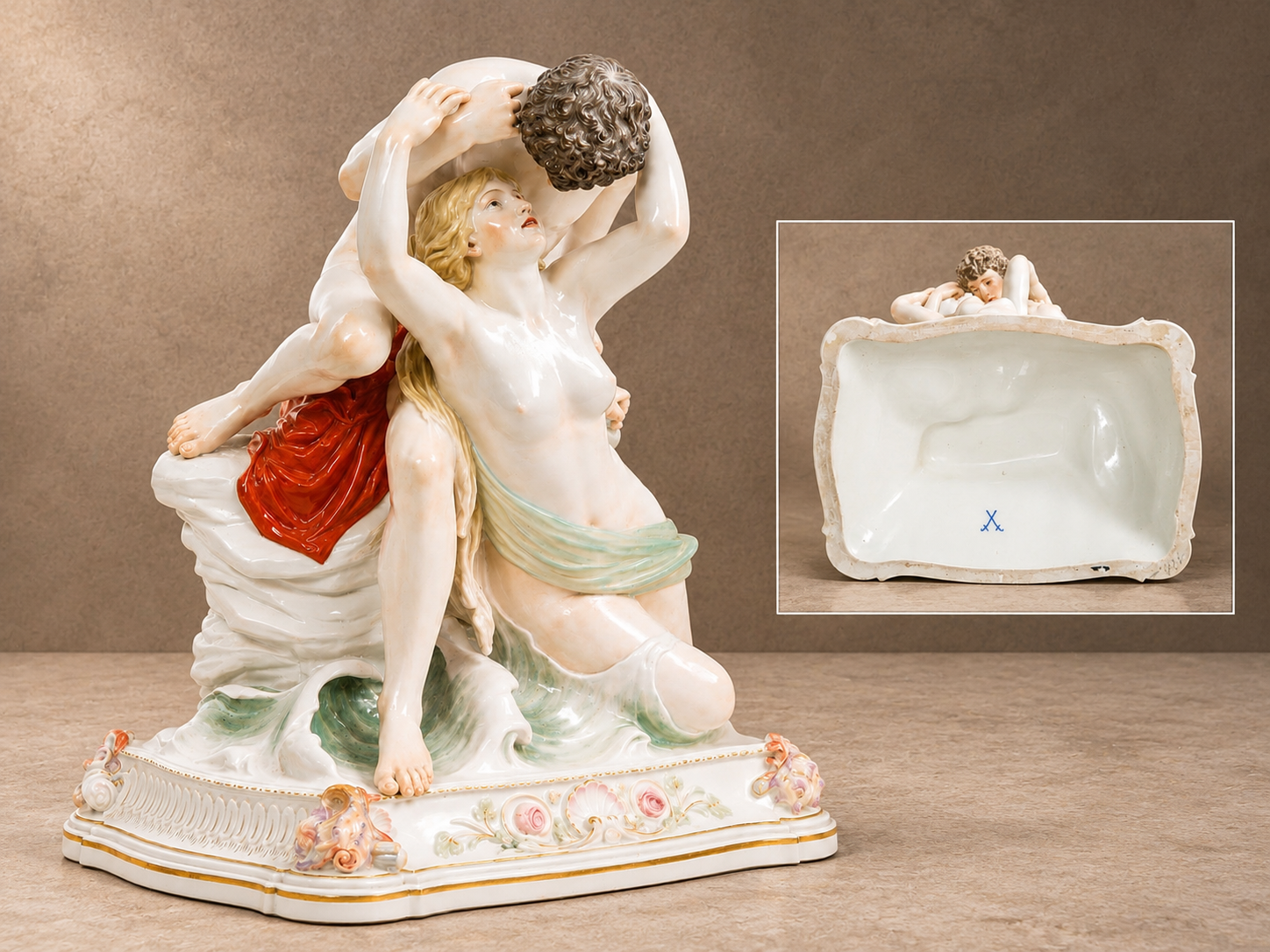
Turn over a porcelain sculpture, vase or plate, and you will often find a small mark. Two crossed swords, a crown, a coat of arms or barely legible numbers may offer the first clue to an object’s origin, period of manufacture and sometimes even its specific model.
Yet a mark does not tell the whole story. On its own, it cannot confirm authenticity, establish a precise date or determine value. To understand what we have before us, we need to consider the mark alongside the porcelain object itself.
Why Manufactories Began Marking Porcelain
When hard-paste porcelain began to be produced in Europe in the early eighteenth century, it became both a technical achievement and a valuable commodity. As production grew, so did the need to distinguish one manufactory’s wares from another’s.
Meissen is one of the best-known examples. Founded in Saxony in 1710, it was for a time the only manufactory in Europe producing hard-paste porcelain. As technical knowledge spread, competitors emerged, creating a need to identify original pieces clearly.
In 1722, the manufactory proposed using two crossed swords taken from the coat of arms of the rulers of Saxony. Painted in blue beneath the glaze, the mark eventually became one of the world’s best-known porcelain symbols.
Today, the swords may look like a simple maker’s signature, but their origins recall a time when the secrets of porcelain production were closely guarded and a manufactory’s reputation mattered greatly.
The Same Mark, Different Periods
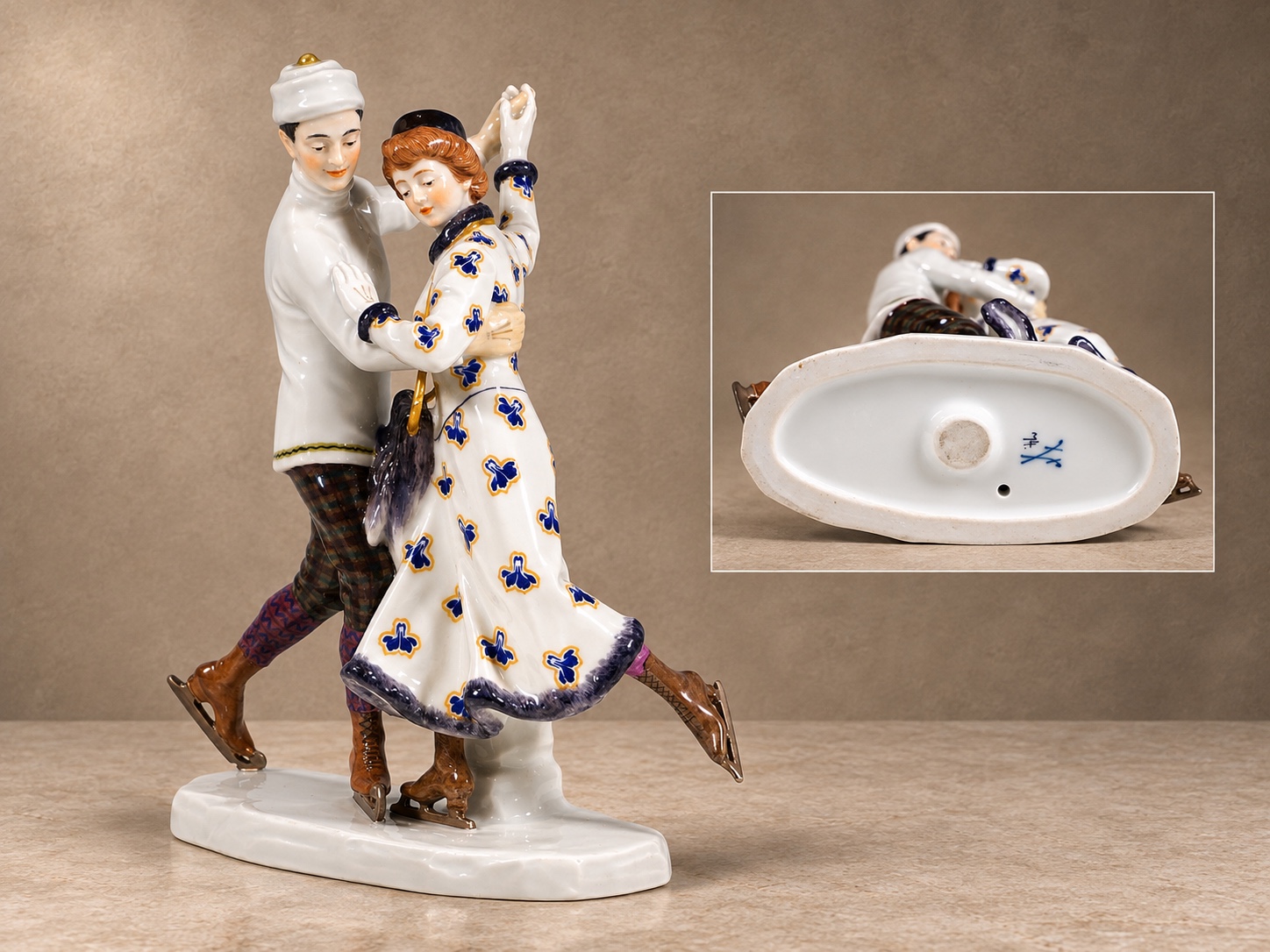
Even a familiar manufactory mark can have many variations over the centuries.
The Meissen swords have not always looked the same. Their shape, proportions and hilt details changed, and dots or other symbols were sometimes added.
For example, the mark used between 1774 and 1814, with a star beneath the crossed swords, is often called the Marcolini period mark. Distinctive marking variations also appeared in the early twentieth century.
These differences help researchers estimate when a piece was made. However, a historical version of a mark must always be considered alongside the object’s shape, decoration and manufacturing technique.
A resemblance to a mark shown in a catalogue does not, by itself, prove that a piece was made during that period.
Nymphenburg: A Coat of Arms as a Witness to History
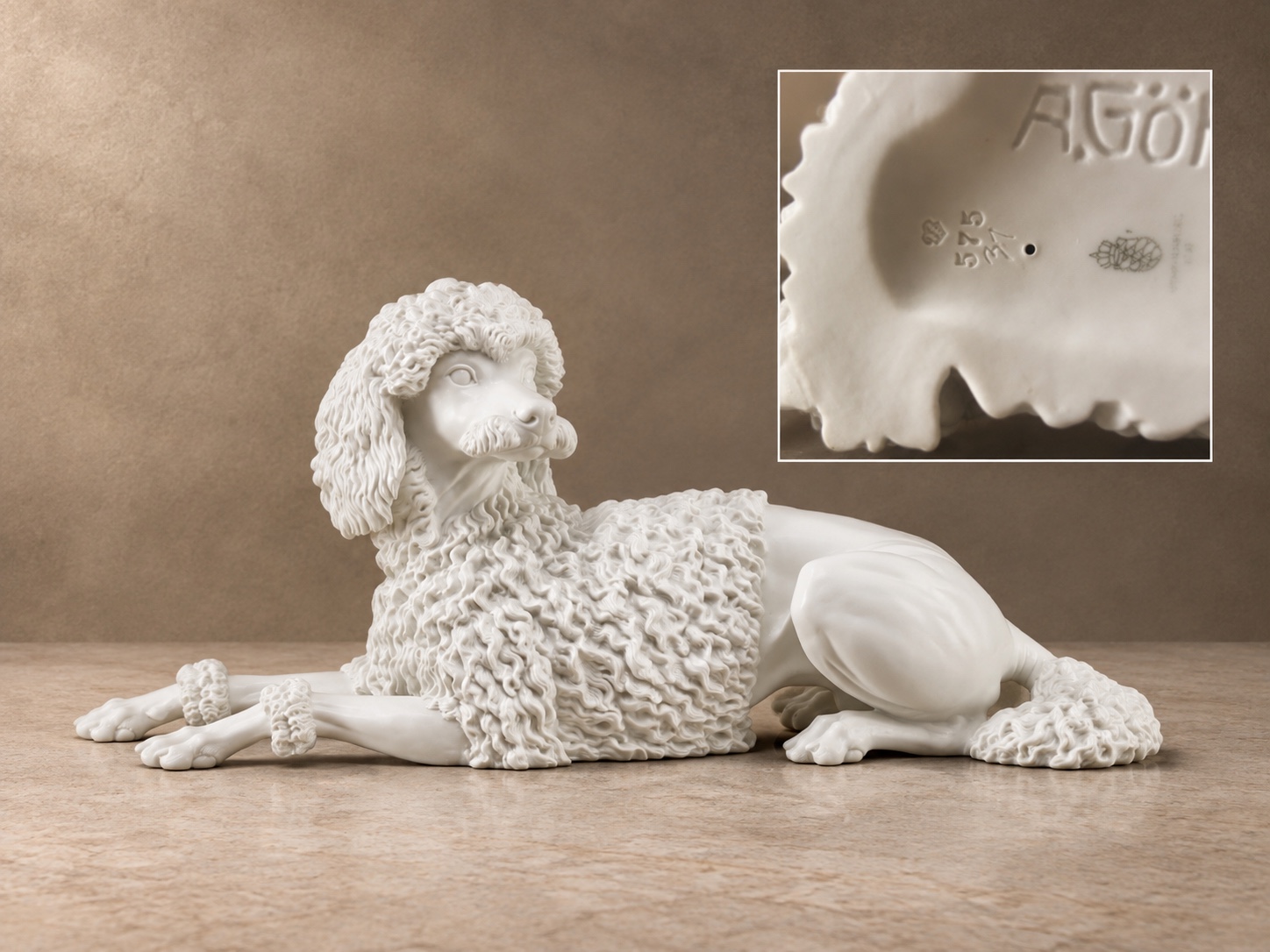
The Nymphenburg porcelain manufactory in Bavaria offers a different example of marking.
In 1754, it began using a motif from the Wittelsbach family coat of arms: a shield decorated with lozenges. Its design, heraldic details and methods of application changed over time, but the central symbol remained recognisable.
Nymphenburg still uses marks impressed by hand into soft porcelain paste. Marking is therefore more than a final stage of production: it is part of shaping the object itself.
Sculptures may also bear a model number, and sometimes marks indicating size or shape.
This highlights an important distinction for collectors. A model number can help identify a work, but it does not necessarily tell us when a particular example was made. The same sculptural model may be used across different decades or even centuries.
Royal Copenhagen: A Mark That Can Help Date a Piece
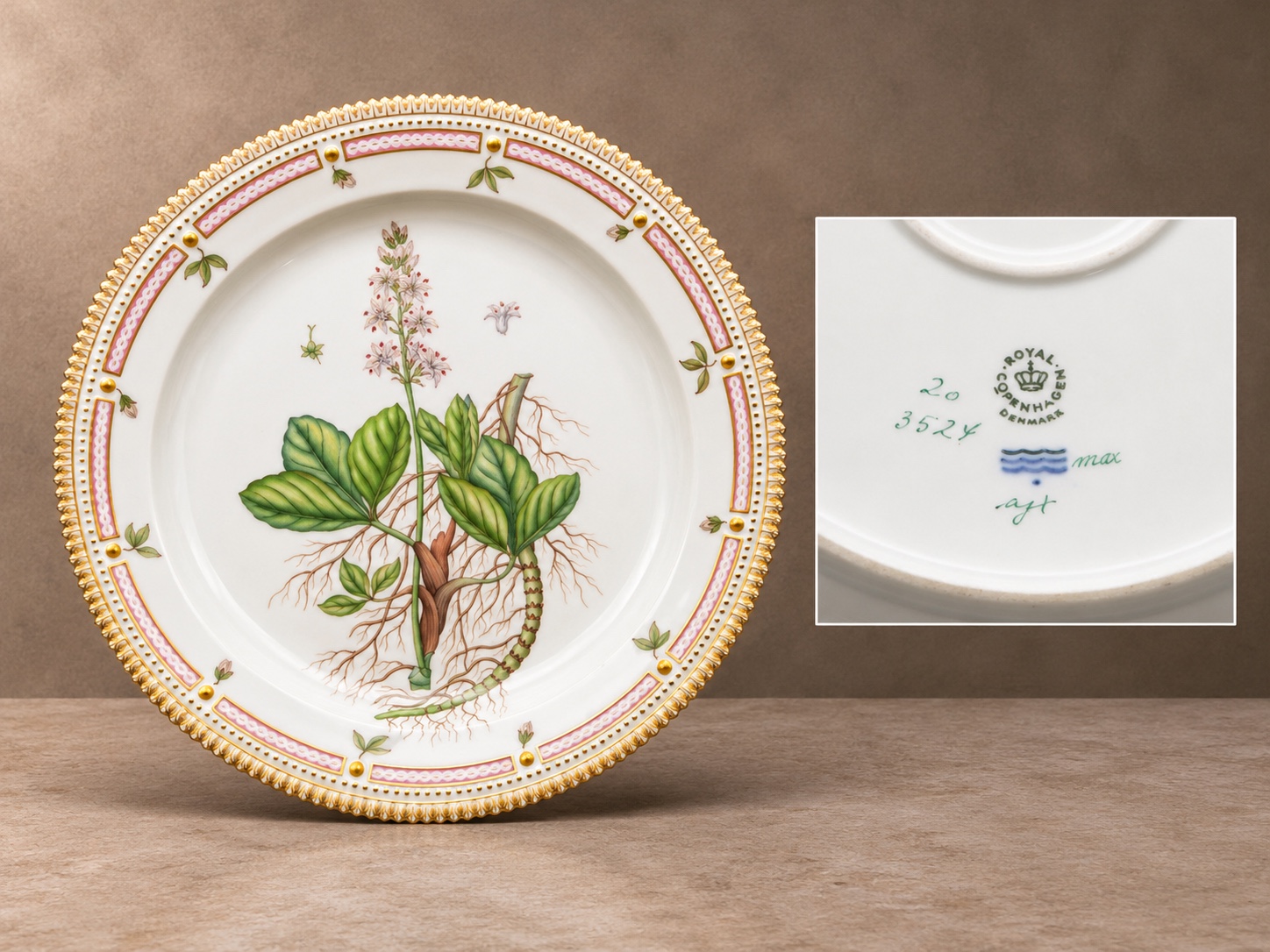
Denmark’s Royal Copenhagen manufactory is known for its symbol of three wavy lines. These represent three Danish waterways: the Øresund, the Great Belt and the Little Belt.
Over time, not only the presentation of this mark changed, but also its accompanying inscriptions, crown and other elements.
The dating system used in the twentieth century is particularly interesting. During certain periods, a small dot above or below a particular letter in the manufactory’s name can help establish the year of production.
At first glance, such a dot may seem accidental. With knowledge of the marking system, however, it becomes a meaningful clue to a piece’s origins.
This is a good example of why examining porcelain means looking beyond the largest symbol to the smallest details beside it.
Numbers, Letters and Puzzling Impressed Marks
Turn over a porcelain object, and you may find several numbers, letters or small impressed marks beside the manufactory’s mark.
They may relate to the model, decoration, size, painter, year of manufacture or quality control, but their meaning depends on the particular manufactory and period.
Meissen pieces may bear decoration and painter numbers, while Nymphenburg sculptures carry model markings. Such numbers are not a universal porcelain dating code: it would be a mistake to interpret every number on a base as a year of manufacture.
Sometimes a number identifies a model created in the eighteenth century, even though the object itself was made much later.
In porcelain history, it is essential to distinguish between the date a model was created and the date a particular piece was produced.
Does an Original Mark Guarantee Authenticity?
Not always.
The marks of famous manufactories have long encouraged imitation. Some pieces were deliberately made to copy familiar shapes, decoration or markings.
More complex situations also exist. Porcelain may have been made at one manufactory but decorated later or in another workshop. Original undecorated pieces sometimes passed into the hands of independent painters.
In such cases, a genuine manufactory mark does not reveal the full history of an object’s decoration.
Assessing authenticity involves proportions, modelling quality, porcelain body, glaze, painting, gilding and other details. These should be consistent with the presumed maker and period of manufacture.
If a mark looks convincing but the sculpture itself does not match known works by the manufactory, the discrepancy calls for further investigation.
What Does a Mark Tell Us About Value?
Even identifying the maker with certainty does not, on its own, answer the question of an object’s value.
Value depends on more than the manufactory’s name. Rarity, artistic quality, period of manufacture, condition, restoration, provenance and collector demand all matter.
Two pieces from the same manufactory may bear similar marks yet differ considerably in value.
This is particularly relevant to sculptures whose historical models were reproduced later. An early, rare and well-preserved example will not necessarily have the same value as a later version of the same composition.
Meissen itself emphasises that collectible and historical value is shaped by supply and demand in the antiques market, rather than the manufactory mark alone.
The Mark Is Only the Beginning of the Story
Researching a porcelain mark begins with careful examination.
There is more to it than reading an inscription or recognising a symbol. Look at whether the mark is painted beneath the glaze, impressed into the body or applied in another way. Are there numbers nearby? Do they appear to belong to the same stage of production? Do the object’s shape and decoration match the period indicated by the mark?
Sometimes the answer can be found in a maker’s archive or a catalogue of historical marks. In other cases, specialist assessment and comparison with reliably documented pieces are needed.
Ultimately, a small mark on the underside of porcelain is a starting point, not a final answer.
It can open a window onto a manufactory’s history, reveal a tradition of craftsmanship and help place an object in time. Only when considered alongside the work itself, however, does it become a truly valuable witness to history.