
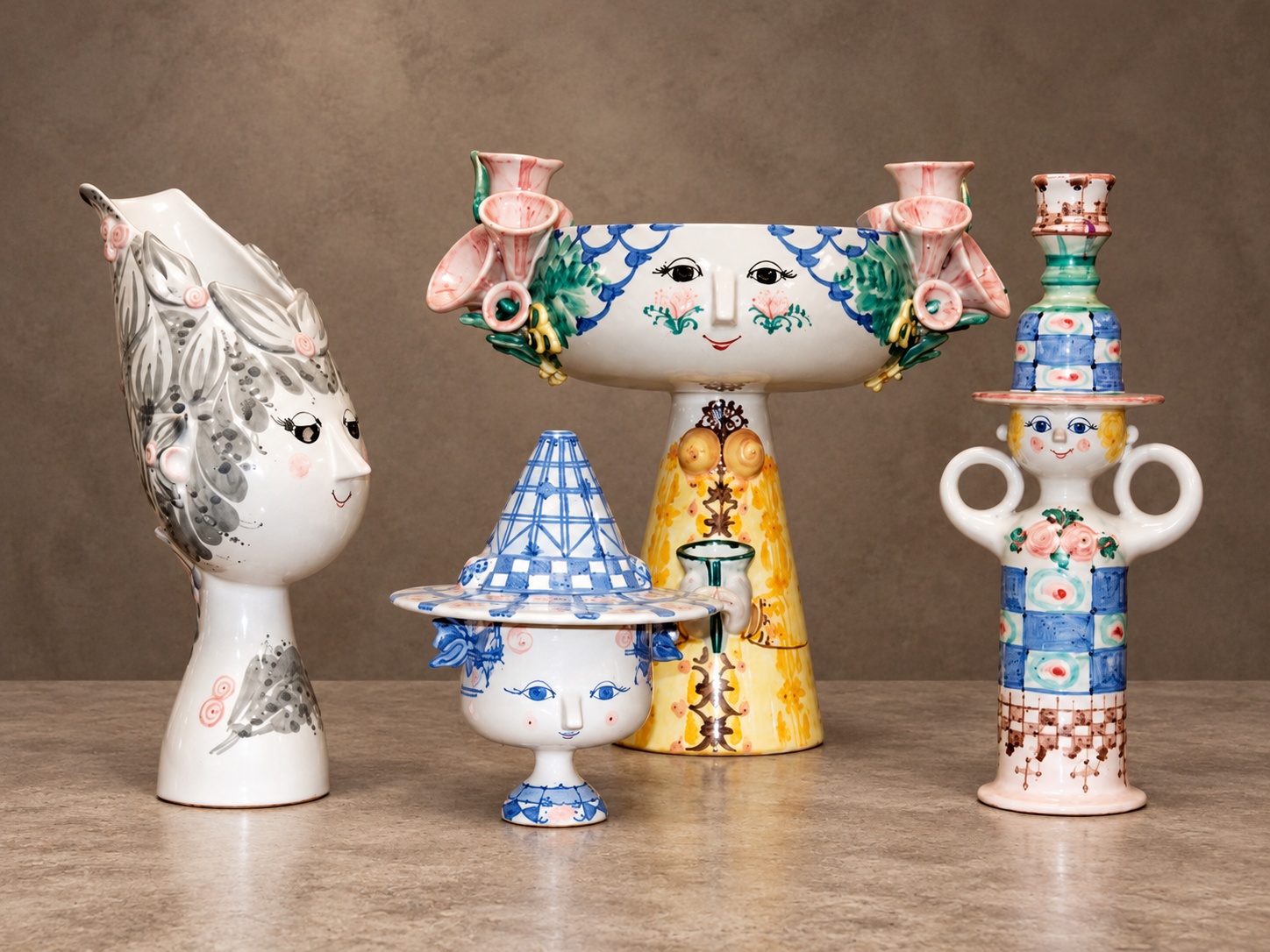
In Bjørn Wiinblad’s works, faces are surrounded by flowers, costumes blossom with ornament, and a small scene on a plate recalls a book illustration. The eye follows a line and discovers another detail: a gesture, a bird, an elaborate headdress. In this world, ornament helps tell the story.
The Danish artist worked in ceramics, porcelain, graphic art, textiles and stage design. Across these different materials, his distinctive style remained recognisable: imaginative figures, meticulous drawing and close attention to the mood of a narrative.
From Typography to Drawing
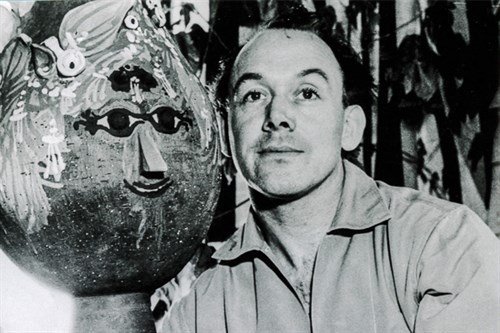
Bjørn Wiinblad was born in Copenhagen in 1918. His path into art began with training as a typographer, followed by studies at the Royal Danish Academy of Fine Arts. His ambition to become an illustrator met a newly discovered interest in ceramics.
His first exhibition took place at Copenhagen’s Binger Gallery in 1945. Soon afterwards, Wiinblad began working with the Nymølle ceramics factory while also producing illustrations and posters. These activities developed alongside one another: a drawing could become a book page, a wall plaque or part of a theatrical setting.
These beginnings help explain his approach to objects. Wiinblad was interested in a surface on which a character, ornament and narrative could emerge.
A Distinctive Voice in Danish Design
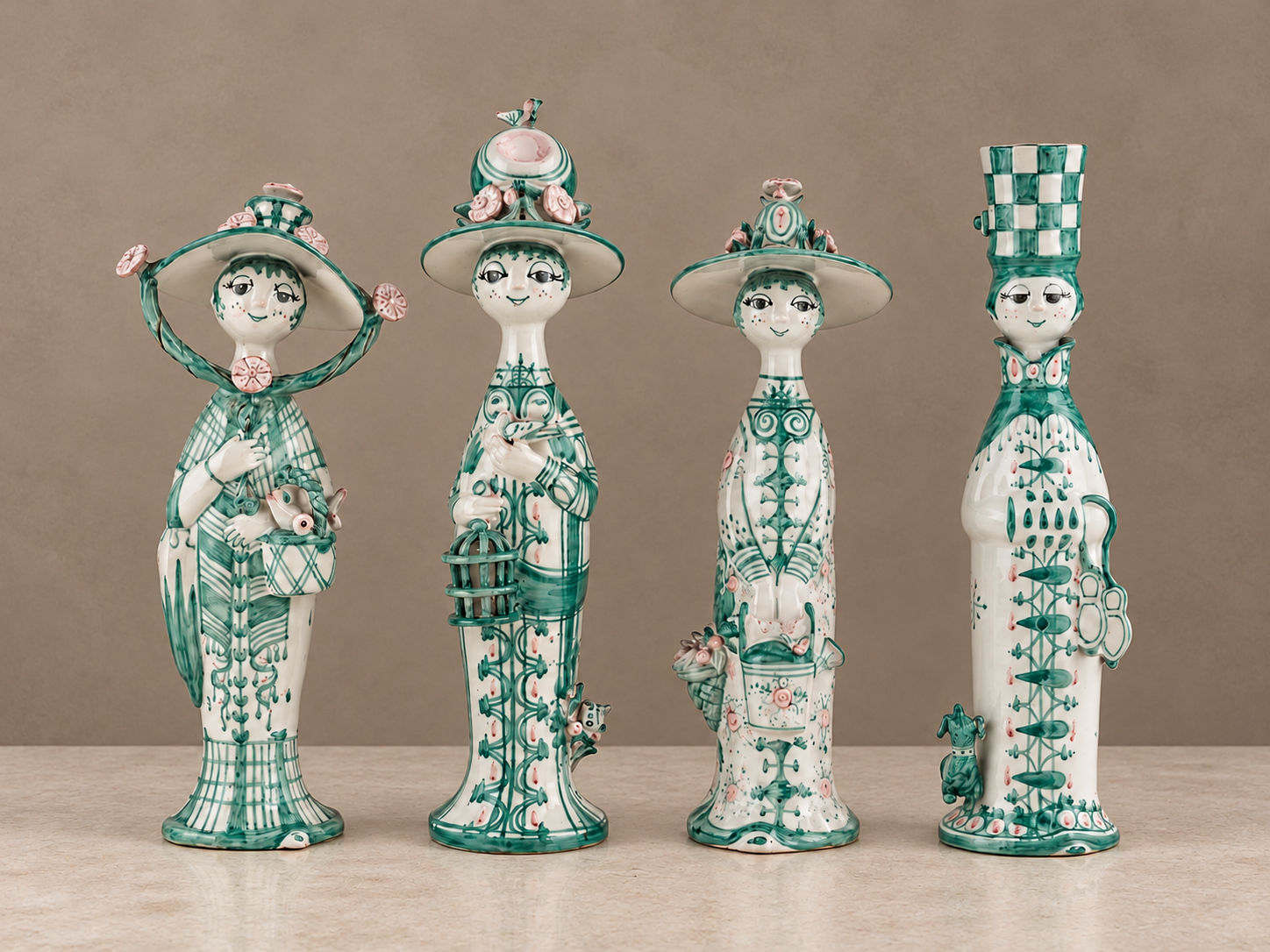
Danish design is often associated with restraint, clear construction and forms that emphasise the qualities of a material. Wiinblad’s work broadens this picture. Rich in decoration, theatricality and fantasy, it nevertheless remains a recognisable part of Danish applied art.
The official presentation of his work highlights imaginative female characters, fantastical animals and abundant ornament. These figures can be understood as characters in their own right: their appearance, posture and surroundings establish a mood before we even try to identify the story.
When looking at these works, it is worth pausing over the rhythm of the drawing. Small marks and plant forms fill the space, yet the eye keeps returning to a face or a gesture. This relationship between rich decoration and a clearly defined character gives the composition coherence.
Theatre, Music and Fairy Tales
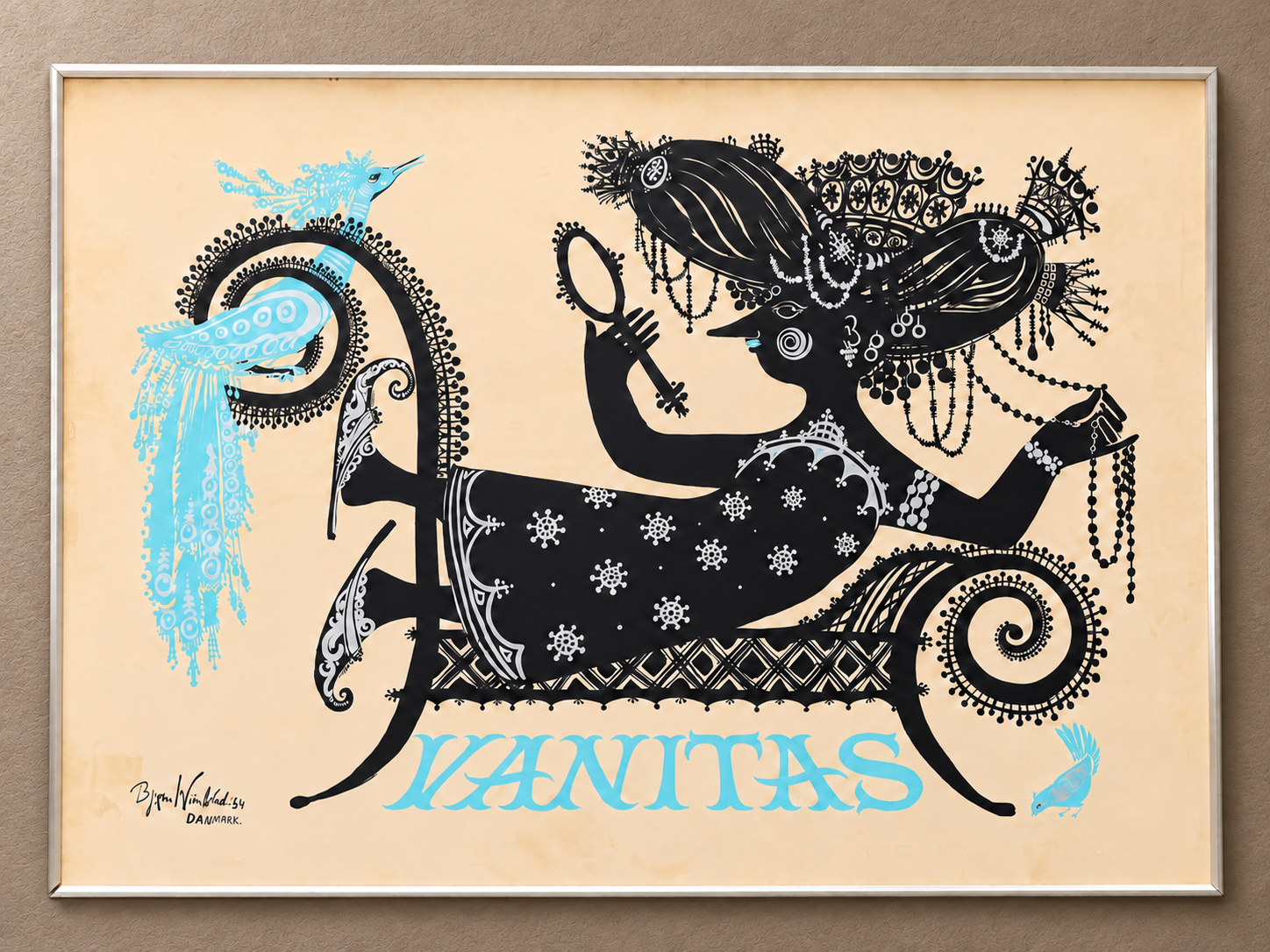
Theatre was an important part of Wiinblad’s professional life. He designed sets, costumes and posters, while music and fairy-tale themes also appeared in his other work.
On stage, a character is revealed through costume, movement and setting. His decorated plates and vases can be read in a similar way: the pattern of a garment, a flower or a line surrounding a figure becomes part of the visual narrative. A small surface accommodates a remarkably complex scene.
A retrospective at the Museum of Danish America presented textiles and everyday objects alongside ceramics and graphic works. The exhibition revealed the breadth of his practice, from one-off works to objects produced more widely for domestic interiors.
Rosenthal: Porcelain as a Stage
Wiinblad’s collaboration with the German porcelain manufacturer Rosenthal began in 1957 and lasted almost five decades. His drawings and figurative compositions became an important part of its studio-line.
One of the most striking examples is Zauberflöte, or The Magic Flute, a service inspired by Mozart’s opera. Its characters and scenes are rendered in delicate relief. Light and shadow bring them out in the white porcelain, while gilding adds another element to the Sarastro version.
In these works, narrative acquires a tangible form. The rim of a plate becomes a space for figures, and the relief invites the viewer to examine the object from different angles.
Time, the Cycle of the Year and Human Life
In Wiinblad’s work, a story can unfold across a series of objects. In 1965, he created a cycle of twelve monthly plaques for Nymølle. The months gave the images a sequence, allowing one scene to be read alongside another.
The October work Paradise, presented by the Museum of Danish America, depicts a man picking apples and a woman catching them in her dress. A simple action offers an opportunity to observe the relationship between the figures, their gestures and the details of the composition.
These works reward slow looking. First we notice the scene as a whole, then the way it is told.
A Practice Beyond a Single Medium
Wiinblad’s legacy cannot be contained within the history of porcelain alone. The variety of his work shows how closely fine art, craft, theatre and everyday surroundings can come together.
In 1966, the artist moved into the Blue House in Kongens Lyngby. It became both his home and studio, where he lived until his death in 2006. The house offers a broader context for understanding his work as part of an environment shaped over time.
An introduction to Wiinblad can begin with a single plate or vase. A closer look reveals what unites his different works: a sense of narrative, a distinctive line and the ability to give an everyday object the character of a person.
Sources
- Rosendahl Design Group – „Bjørn Wiinblad timeline“. Biographical dates, education, first exhibition, collaborations with Nymølle and Rosenthal, the monthly plaque cycle and the Blue House.
- Rosendahl Design Group – „About Bjørn Wiinblad“. The artist’s imagery, ornament and distinctive place in Danish design.
- Rosenthal – „Bjørn Wiinblad“. Connections with theatre and music, collaboration with the manufactory and the Zauberflöte reliefs.
- Museum of Danish America – „The Whimsical World of Bjørn Wiinblad“. The range of artistic media and examples shown in the retrospective. The original exhibition was organised by the ARKEN Museum of Contemporary Art in Denmark.