
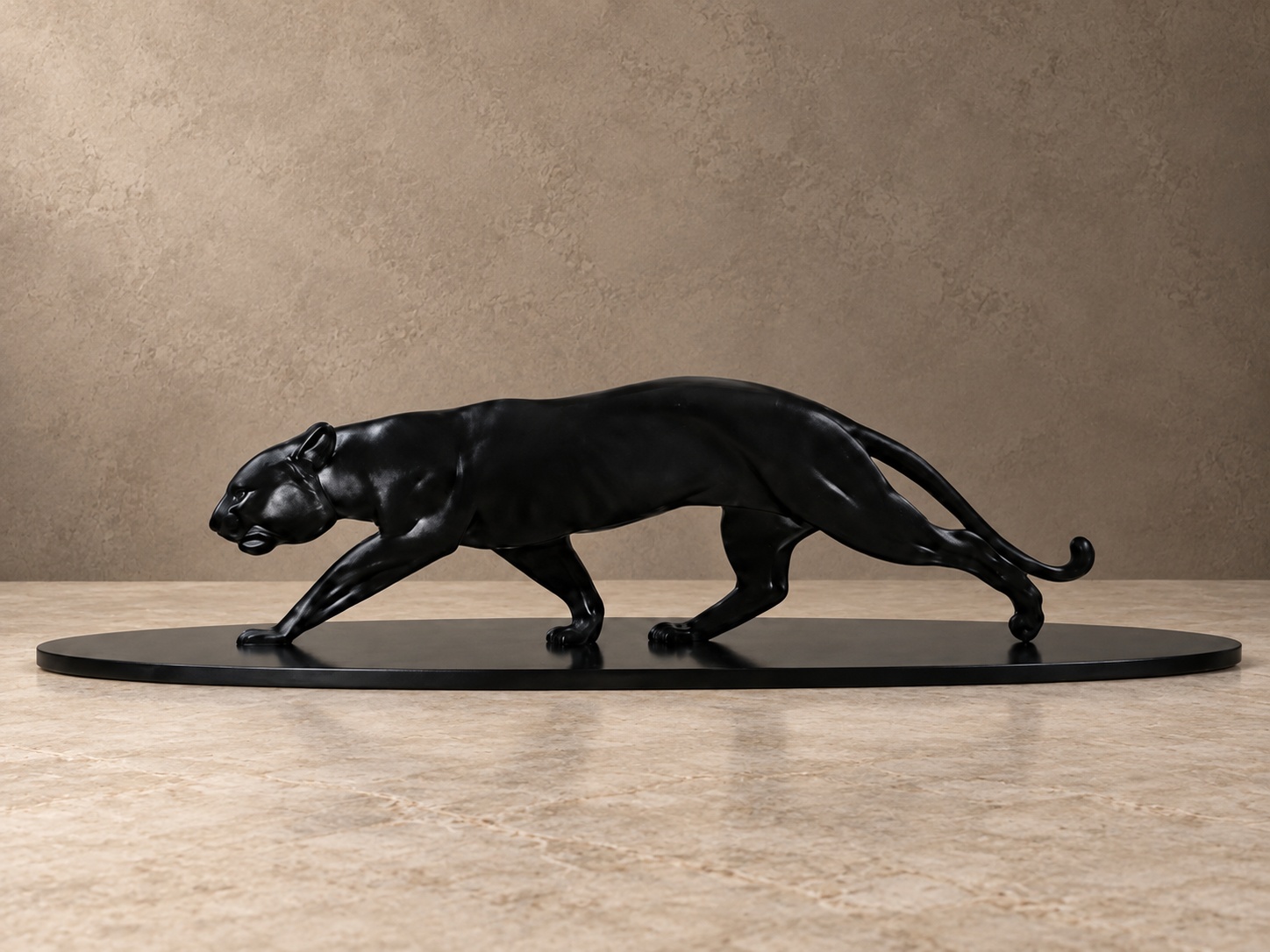
The International Exhibition of Modern Decorative and Industrial Arts, held in Paris in 1925, became an important point of reference for the style we now call Art Deco. Sculpture was displayed alongside furniture, glass, ceramics and metalwork. This juxtaposition was deliberate: an artwork could be conceived with an entire room, its light and the people who would live in it, in mind.
Art Deco had no single sculptural formula. Works from the same period can appear almost opposed: one rich in detail and colour, another smooth and restrained, retaining only the essential lines of the body.
A Style with Many Sources
The 1925 exhibition did not create Art Deco out of nothing. Modern decorative art was being discussed in France before the First World War, and the exhibition had been planned since 1912. After the war, interest in new forms only grew. People wanted objects suited to contemporary life without sacrificing the quality of craftsmanship.
Artists drew on a wide range of sources: ancient Egypt, African and East Asian art, Cubist geometry and the new world of machines. The discovery of Tutankhamun’s tomb in 1922 further fuelled the fashion for Egyptian motifs. In a single work, these influences might meet the traditional techniques of bronze casting or stone carving. Art Deco is therefore better understood as a taste of its time than as one strict set of rules for sculpture.
The Stage and Movement
In interwar Paris, dance and theatre appeared everywhere—in posters, magazines, fashion and small sculptures for interiors. Performances by the Ballets Russes influenced makers of decorative art, while dancers’ poses gave sculptors a way to suggest movement without depicting it literally.
Demétre Chiparus created many such figures. The costumes of his dancers, their raised arms and elongated bodies evoke the stage. In some works bronze is combined with ivory, while coloured or gilded metal further emphasises the costume. Viewed from the side, a figure can reveal something easily missed from the front: how the entire pose rests on a single line of movement.
We can admire these figures for their craftsmanship today while also recognising the limits of their era. Interwar fascination with other cultures often produced simplified, exoticised stage images. That, too, is part of the history of these works.
A Bear Without Carved Fur
François Pompon took a very different path. His Polar Bear, first shown at the Paris Salon d’Automne in 1922, became famous for the clarity of its form rather than its ornament. He did not try to carve every hair. He retained the curve of the animal’s back, the position of its head, its heavy legs and its stride. That is enough to make the bear seem to move.
Pompon’s model was produced in different sizes and in porcelain, marble and bronze. A small figure could stand on a table, while a large version had an entirely different relationship with its surroundings. It is a useful reminder that the effect of a sculpture depends on its scale as well as its form.
Glass and the Sense of Speed
Art Deco sculpture was not confined to galleries or homes. René Lalique made glass figures for car radiators. Victoire, created around 1925, depicts a woman’s head with hair swept backwards as if by a strong wind. This small object says much about the period’s fascination with speed: it was made for a car, yet also worked as a sculpture in its own right.
Lalique is also interesting for his use of light. The silhouette of a bronze figure usually remains clear in any lighting. Glass changes: it may turn opaque in one area and transmit light in another. A change of viewing angle can make the same form appear new again.
How Material Changes a Work
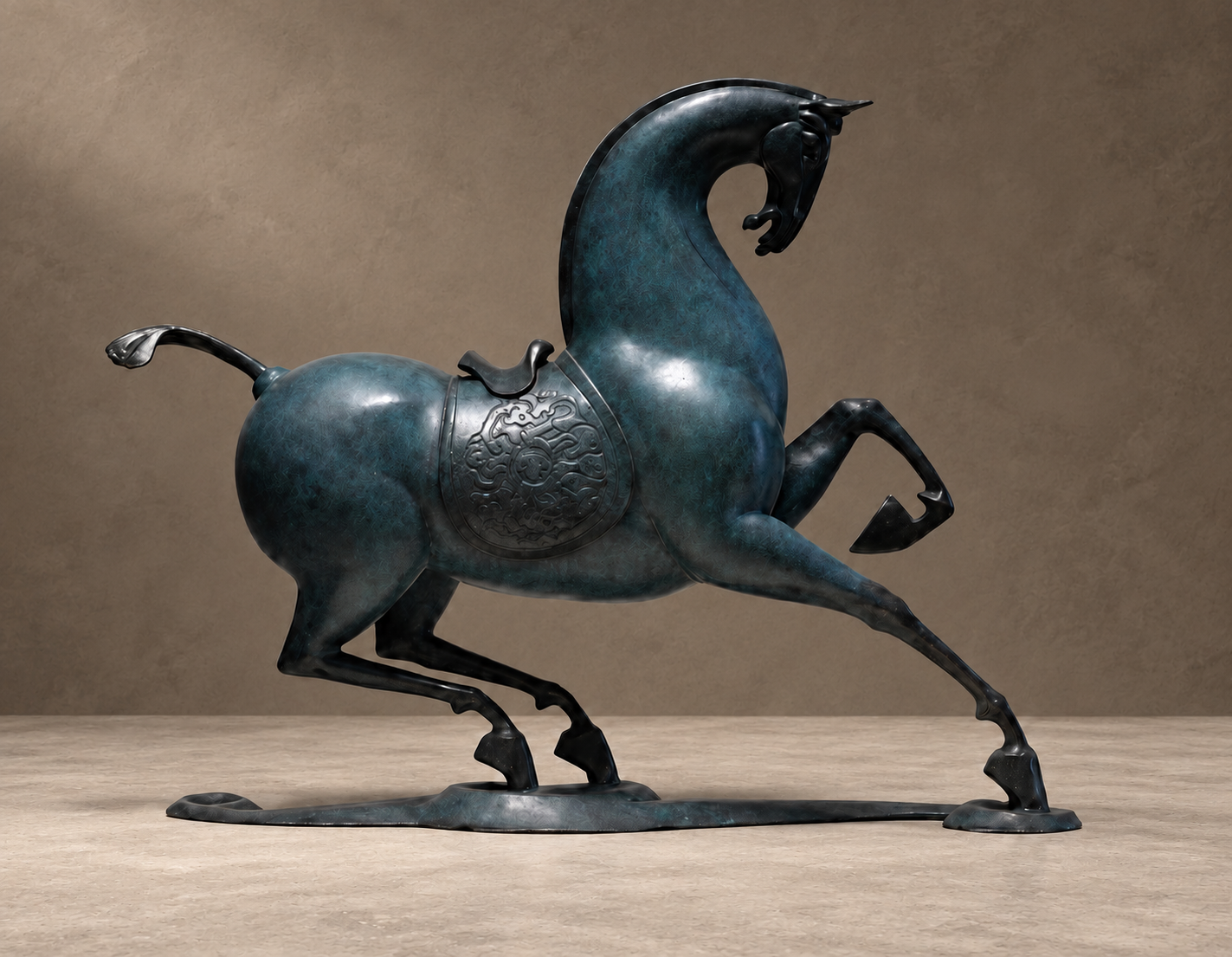
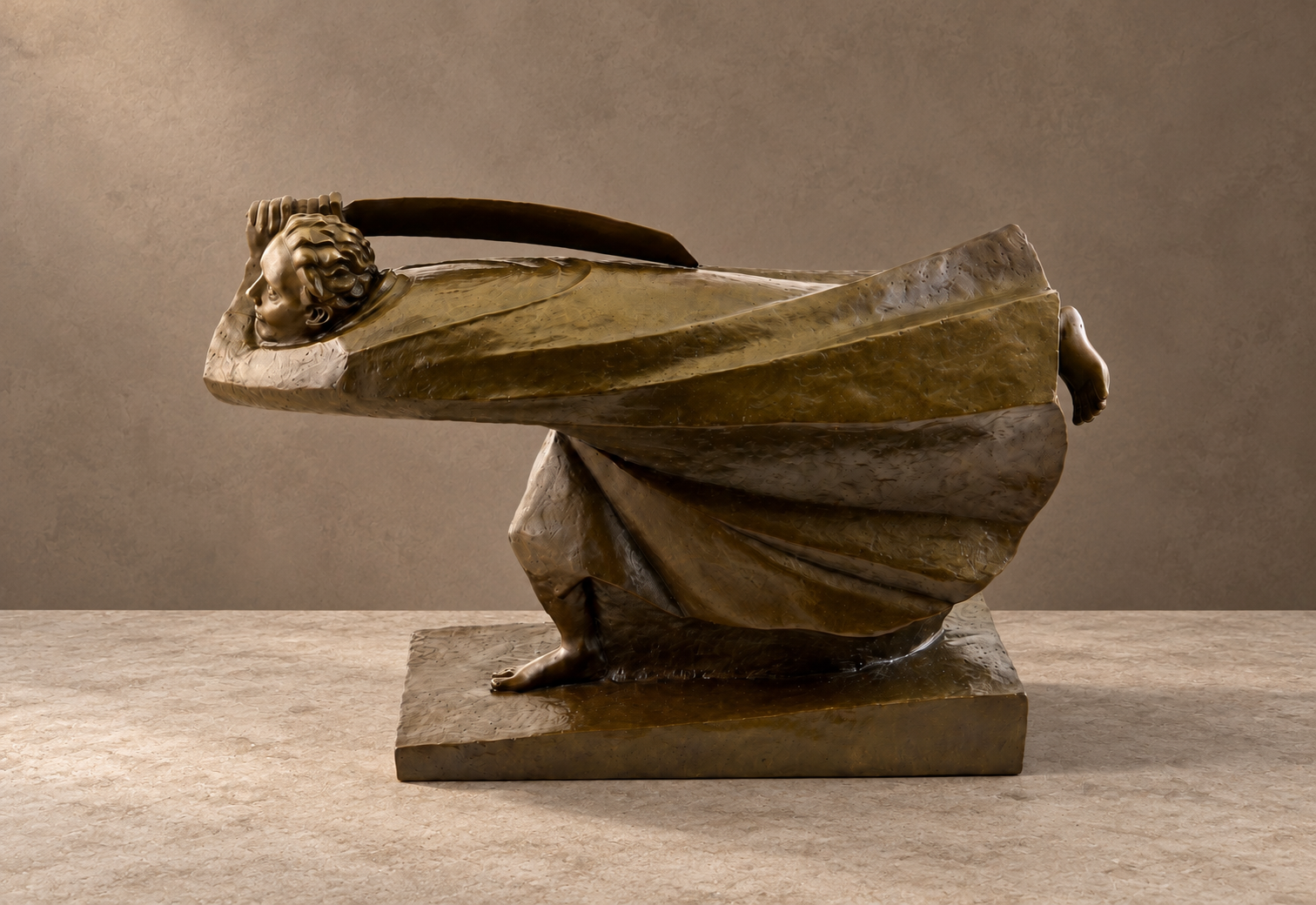
Bronze can support a slender arm, a complex pose and a sturdy base. Its surface may be patinated, polished, coloured or gilded. Stone sculpture is made differently: material is removed rather than poured into a mould, so each movement of the tool carries a different weight. These methods shape the composition as well as its surface.
Art Deco artists were willing to combine materials. At the same time, production techniques became increasingly important. A model might be cast more than once, yet individual examples can differ in their surface finish and later history. When discussing such sculptures, we should distinguish the artist’s original model from a particular surviving object.
Sculpture in the Room
Art Deco sculpture was often intended for rooms people lived in rather than exhibition halls alone. It stood beside a lamp, a vase or a piece of furniture. But “decorative” should not mean “unimportant”. A finely made small figure remains compelling even when removed from the interior of its own time.
Émile-Jacques Ruhlmann, one of the period’s best-known interior designers, admired Pompon’s bear and displayed it in his rooms at the 1925 exhibition. At Edgar Brandt’s gallery in Paris, sculpture was presented alongside paintings, glass, furniture and ceramics. These examples show why a small work of art could matter so much to an entire room: it did more than fill an empty space; it gave the room its own rhythm.
Chiparus’s dancer and Pompon’s bear look almost nothing alike. Yet both show clearly what sculptors of the time were trying to achieve: some concentrated movement in a pose and costume, others in a few carefully chosen lines. Perhaps that is why we still want to walk around these figures and look at them again from another side.
Sources
- Victoria and Albert Museum – An introduction to Art Deco
- Victoria and Albert Museum – Art Deco’s global influences
- The Metropolitan Museum of Art – French Art Deco
- The Metropolitan Museum of Art – François Pompon, Polar Bear
- Sotheby’s – Demeter Chiparus, sculpture catalogue entry
- Victoria and Albert Museum – Art Deco: René Jules Lalique
- The Metropolitan Museum of Art – Design, 1900–1925