
The history of German porcelain is a story of royal ambition, guarded formulas, unrivalled craftsmanship, and design that evolved alongside Europe over three centuries.
At the beginning of the eighteenth century, porcelain was valued in Europe almost like a precious stone. Objects imported from China and Japan adorned royal courts, while the secret of their manufacture seemed impossible to unlock. Experiments carried out in the German lands changed the history of European decorative art: porcelain first became a symbol of royal power, later the industrial foundation of cities and regions, and in the twentieth century one of the most important materials of modern design.
Meissen: The Beginning of European Porcelain
In 1708, European hard-paste porcelain was successfully fired in Saxony. Two years later, Augustus the Strong founded the Royal-Polish and Electoral-Saxon Porcelain Manufactory. Production began at Albrechtsburg Castle in Meissen, a location that made it possible to guard the valuable formula and closely control the work of the craftsmen.
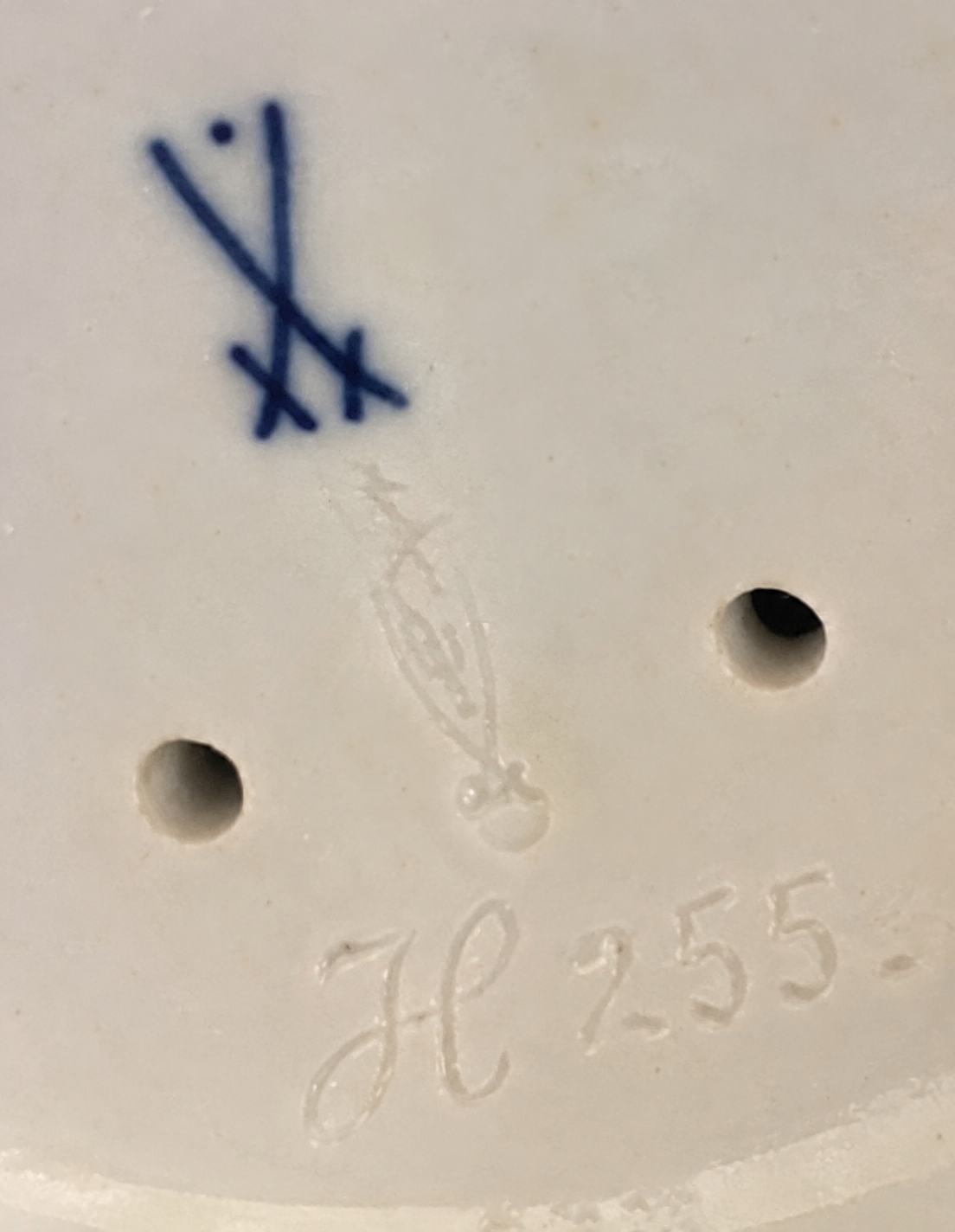
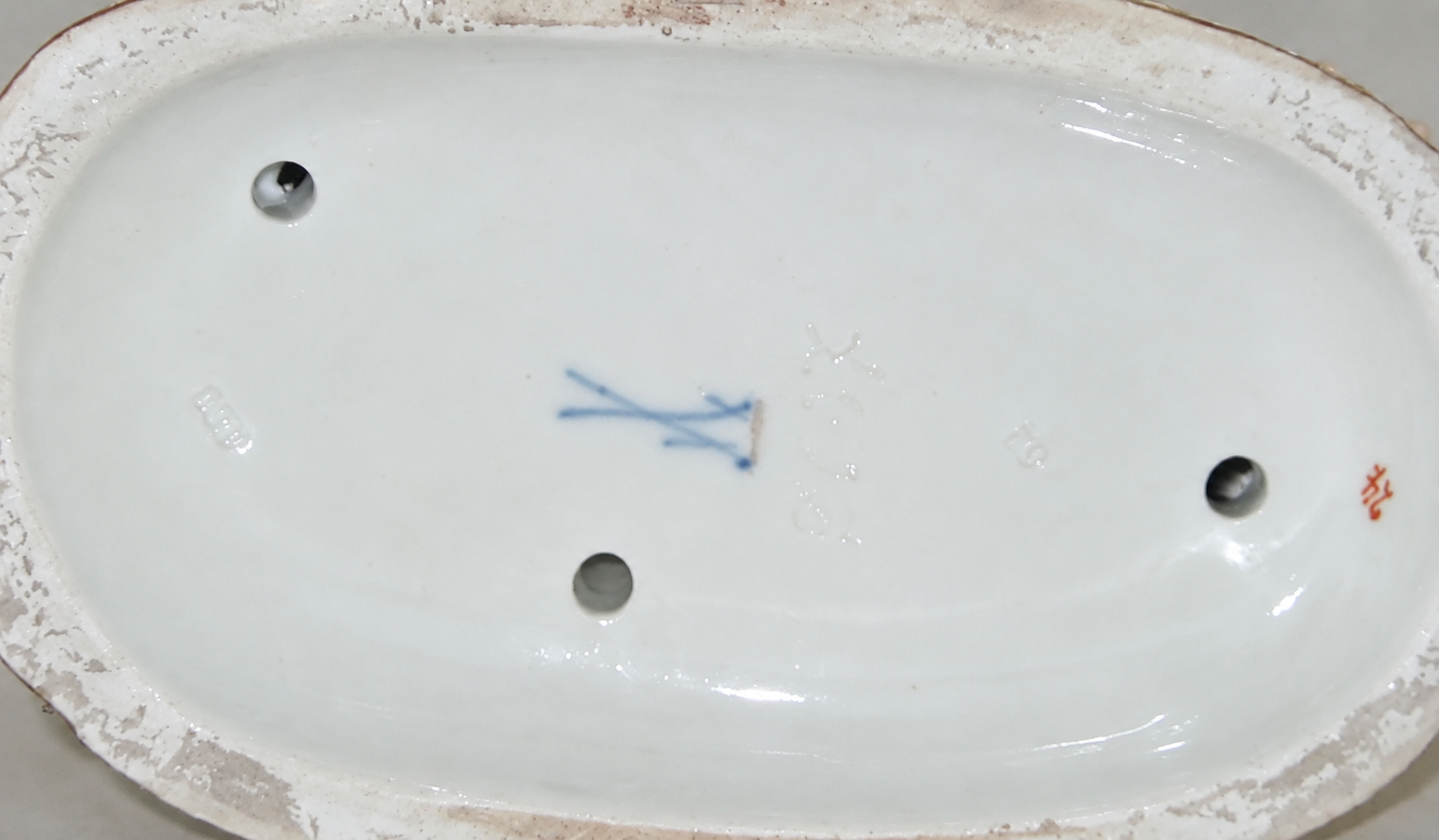
Early Meissen porcelain was shaped by more than a technological breakthrough. Sculptors, modellers, and painters transformed the white material into complex figural compositions, table services, and interpretations of East Asian motifs. The blue crossed swords eventually became one of the most recognisable porcelain marks in the world, although their form and the accompanying marks changed over time.
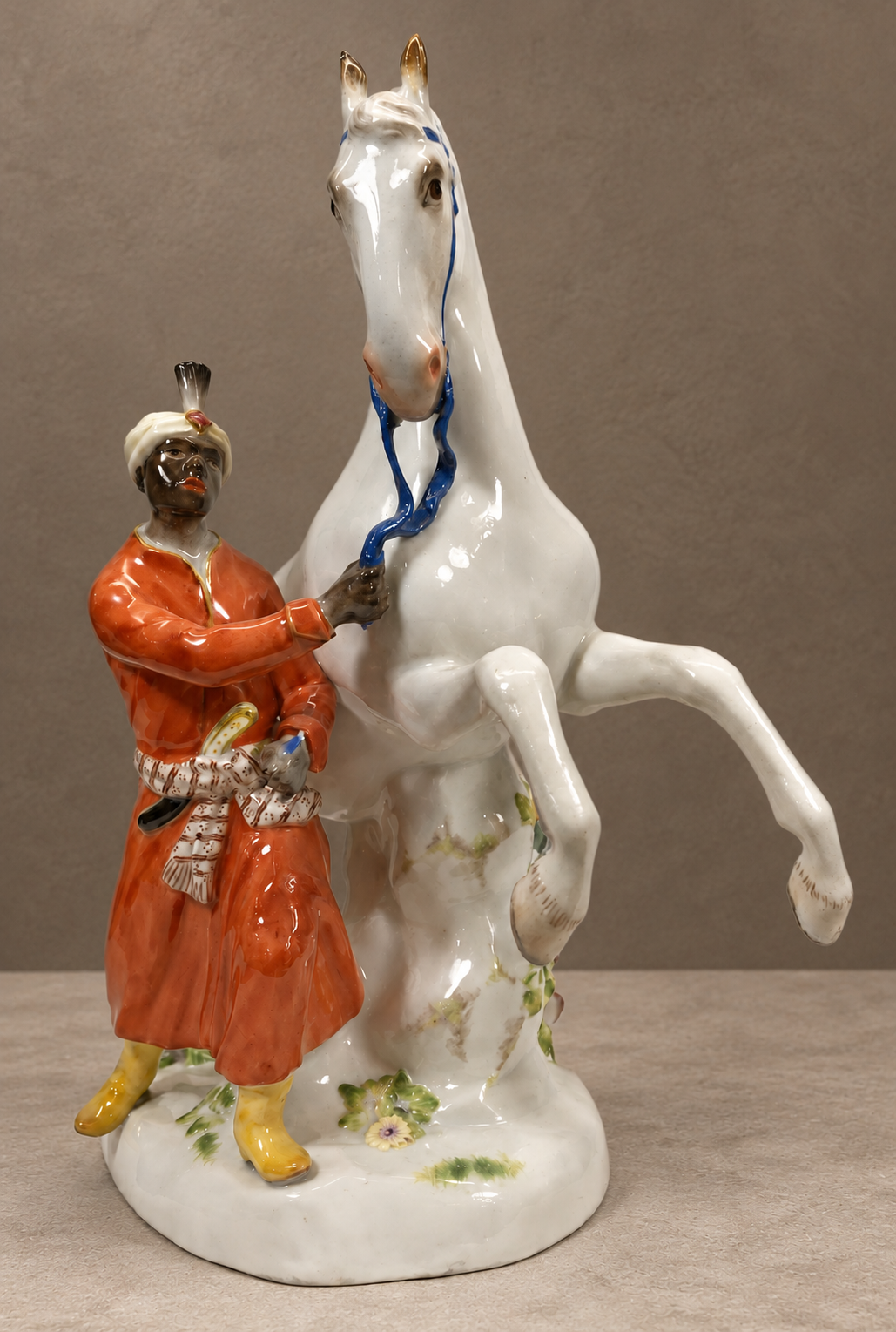
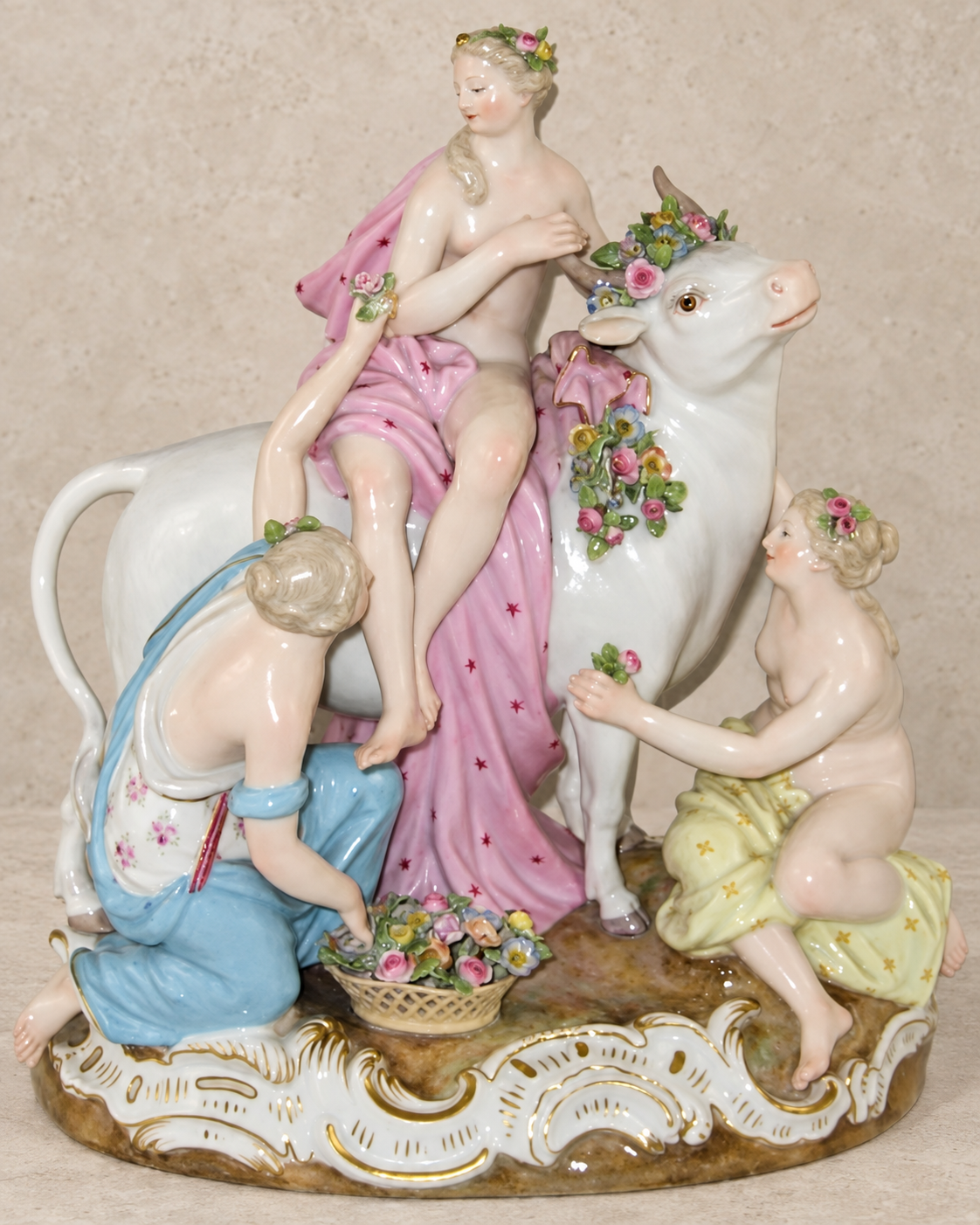
Figural porcelain reveals particularly clearly the manufactory’s ability to unite sculpture and painting. Mythological scenes, allegories, animals, and subjects from court life were modelled as small sculptures intended to be viewed from every side.
Nymphenburg: Sculptural Restraint and the Art of the Animal Figure
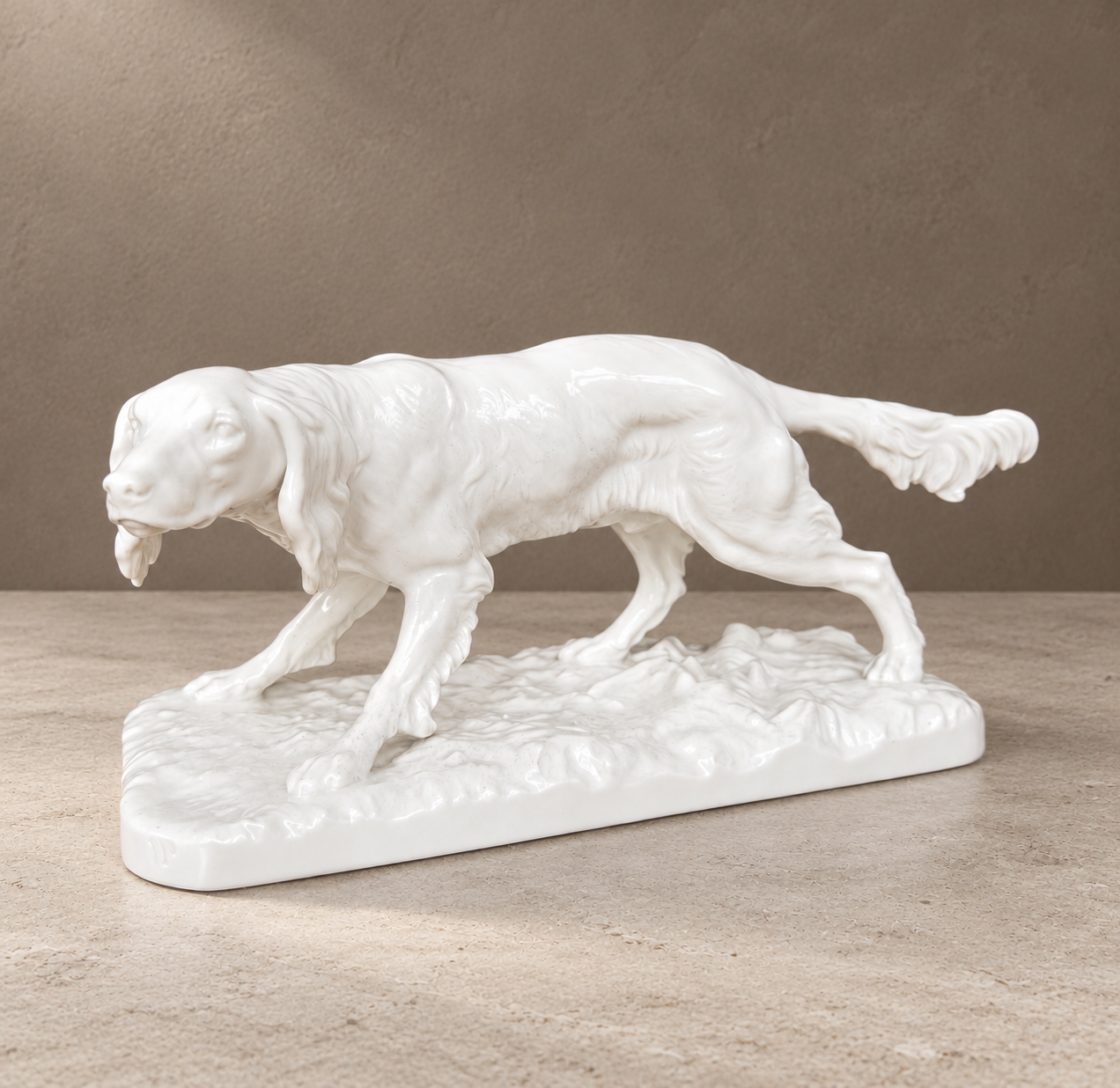
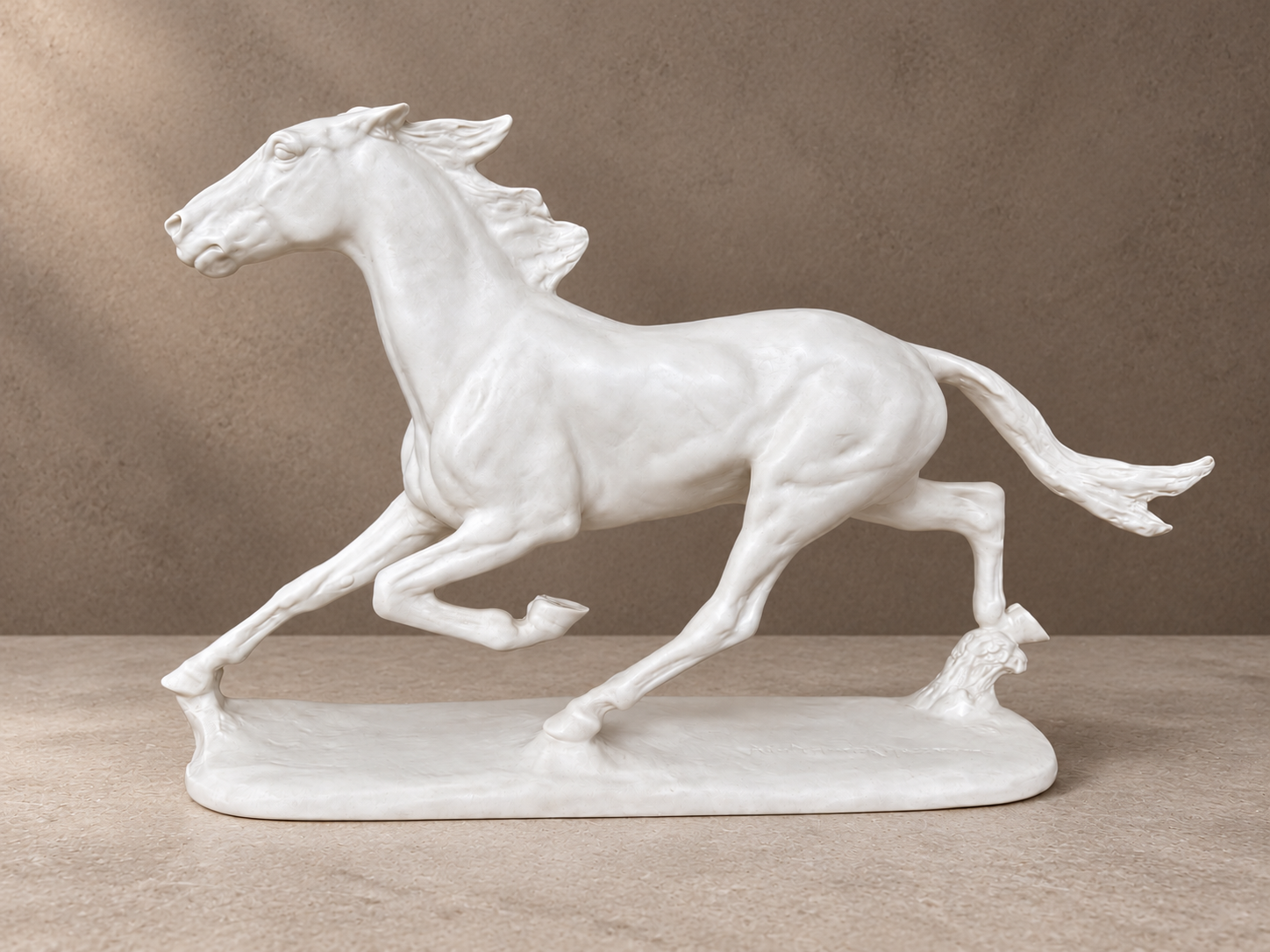
The Nymphenburg manufactory was founded in 1747 at the initiative of Maximilian III Joseph, Elector of Bavaria. It grew out of Munich’s court culture, and its early artistic identity was strongly shaped by the Rococo sculptor Franz Anton Bustelli. The manufactory remains associated with meticulous handcraft, the restrained beauty of white porcelain, and exceptionally lifelike human and animal figures.
Undecorated porcelain is not an unfinished work. Its white surface reveals the modelling more clearly: the tension of the muscles, the rhythm of the coat, movement, and shadows formed by light. In such sculptures, form itself takes the place of colour.
Hutschenreuther: Porcelain Enters the Industrial Age
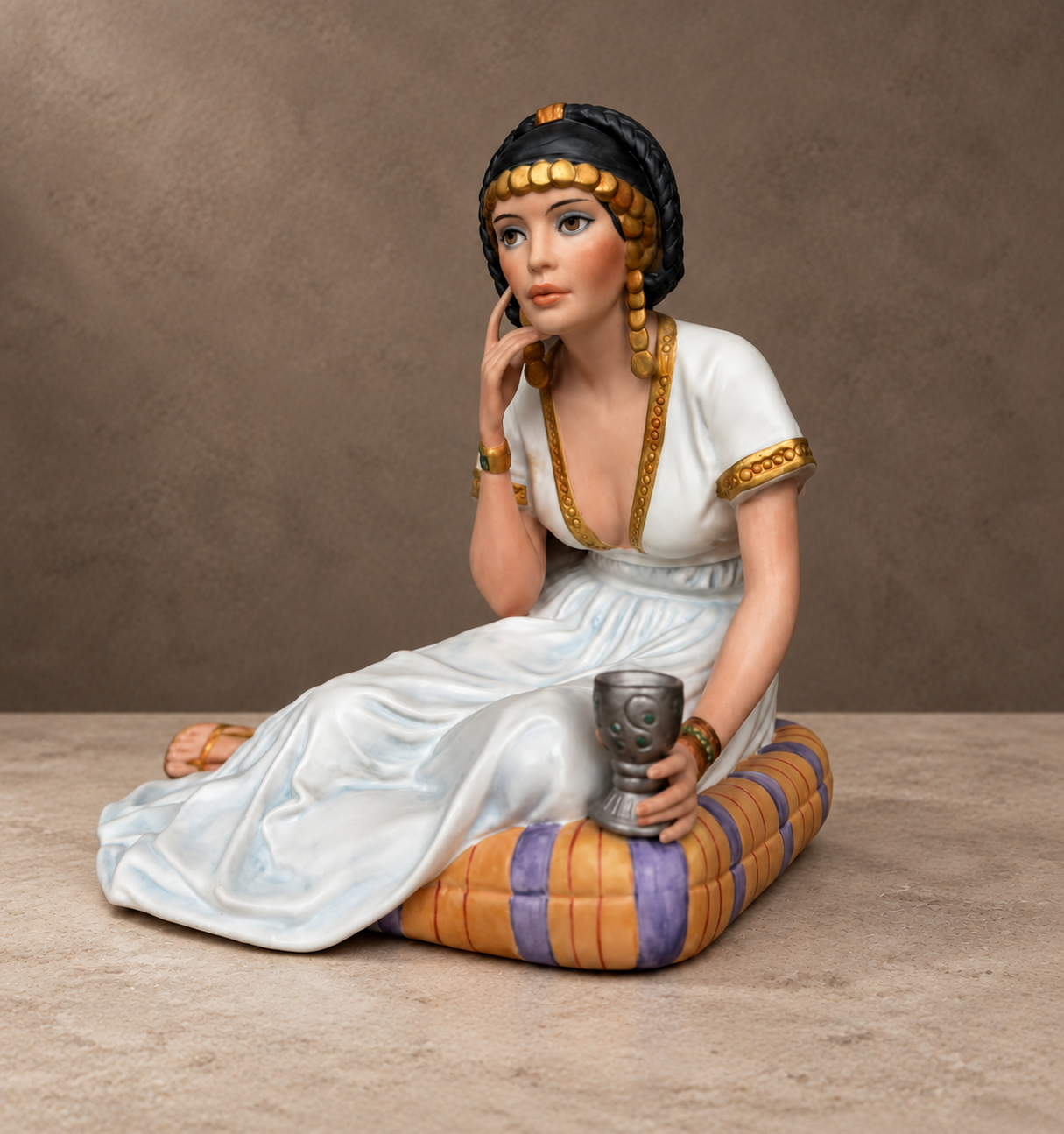
In the nineteenth century, porcelain was no longer solely the privilege of rulers. The C. M. Hutschenreuther factory, founded in Hohenberg in 1814, helped establish the porcelain industry of Upper Franconia. Technological progress allowed production on a larger scale, while higher-grade pieces retained hand-painted decoration, sculptural modelling, and elaborate gilding.
During the twentieth century, manufactories and factories began issuing numbered collectors’ series. A limited edition is not merely a marketing label: it defines the size of a particular model’s production run and identifies an individual example’s place within the series.
Rosenthal: From Selb to International Design
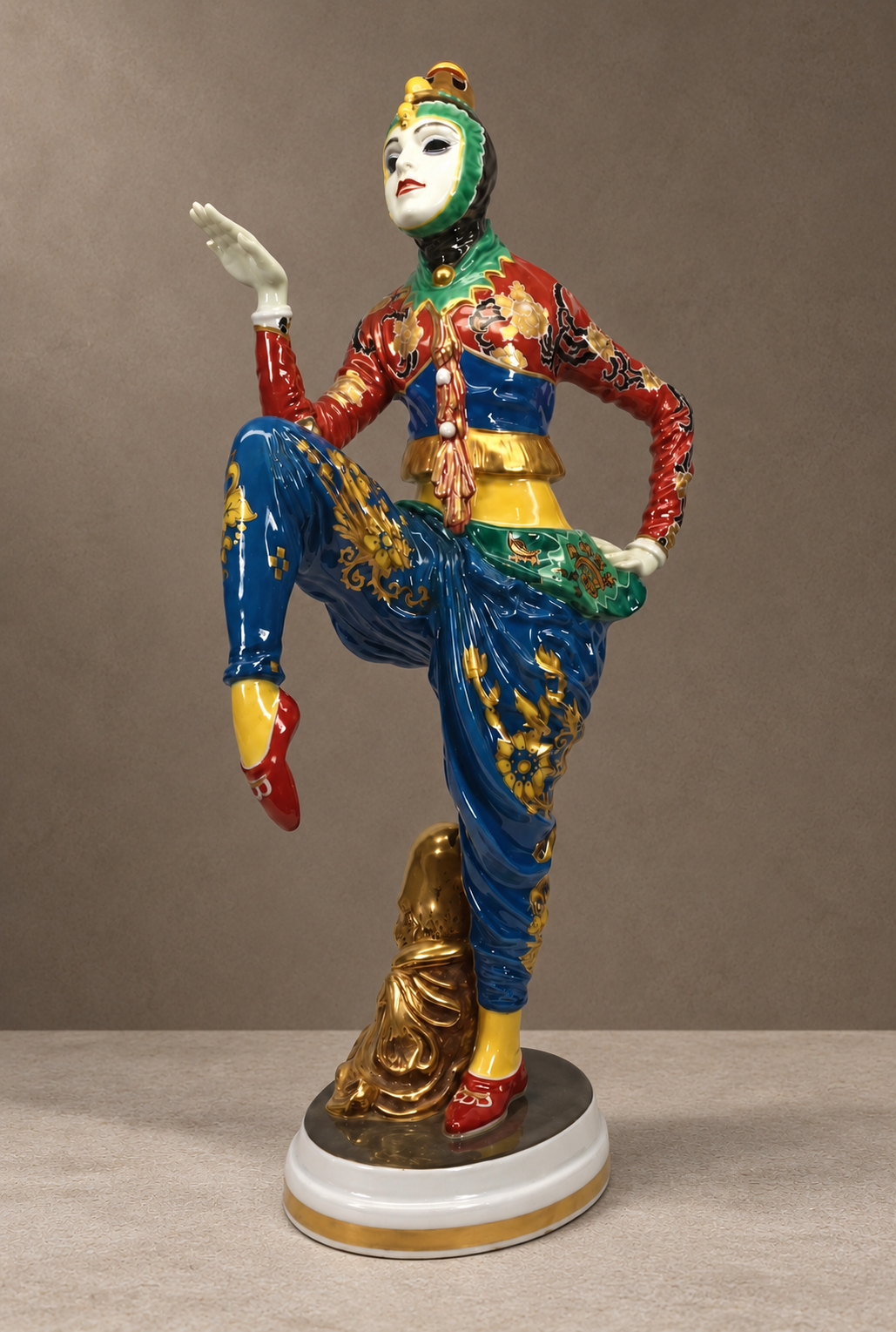
Philipp Rosenthal began decorating porcelain in Selb in 1879 and started producing porcelain in his own factory in 1891. From the outset, the company combined technical innovation with contemporary taste. Later, particularly under Philip Rosenthal Jr., collaborations with artists, architects, and designers transformed Rosenthal into an international name in modern porcelain.
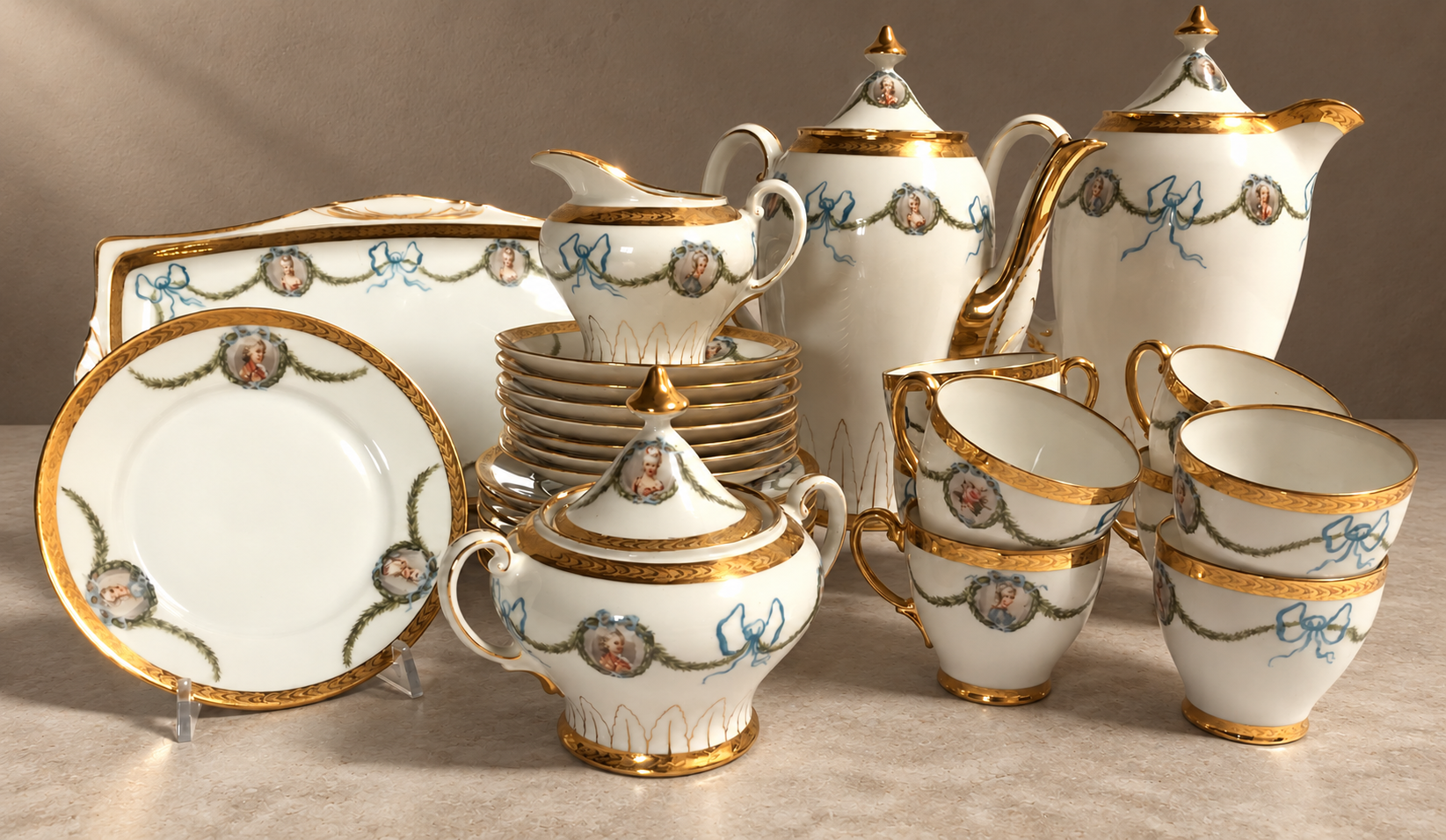
Rosenthal’s work encompasses very different worlds: naturalistic animal sculptures, decorative figures, historically inspired services, and radically modern twentieth-century designs. A maker’s name alone therefore never tells the entire story of an object; the designer, period, mark, and quality of execution are equally important.
How Should German Porcelain Be Examined?
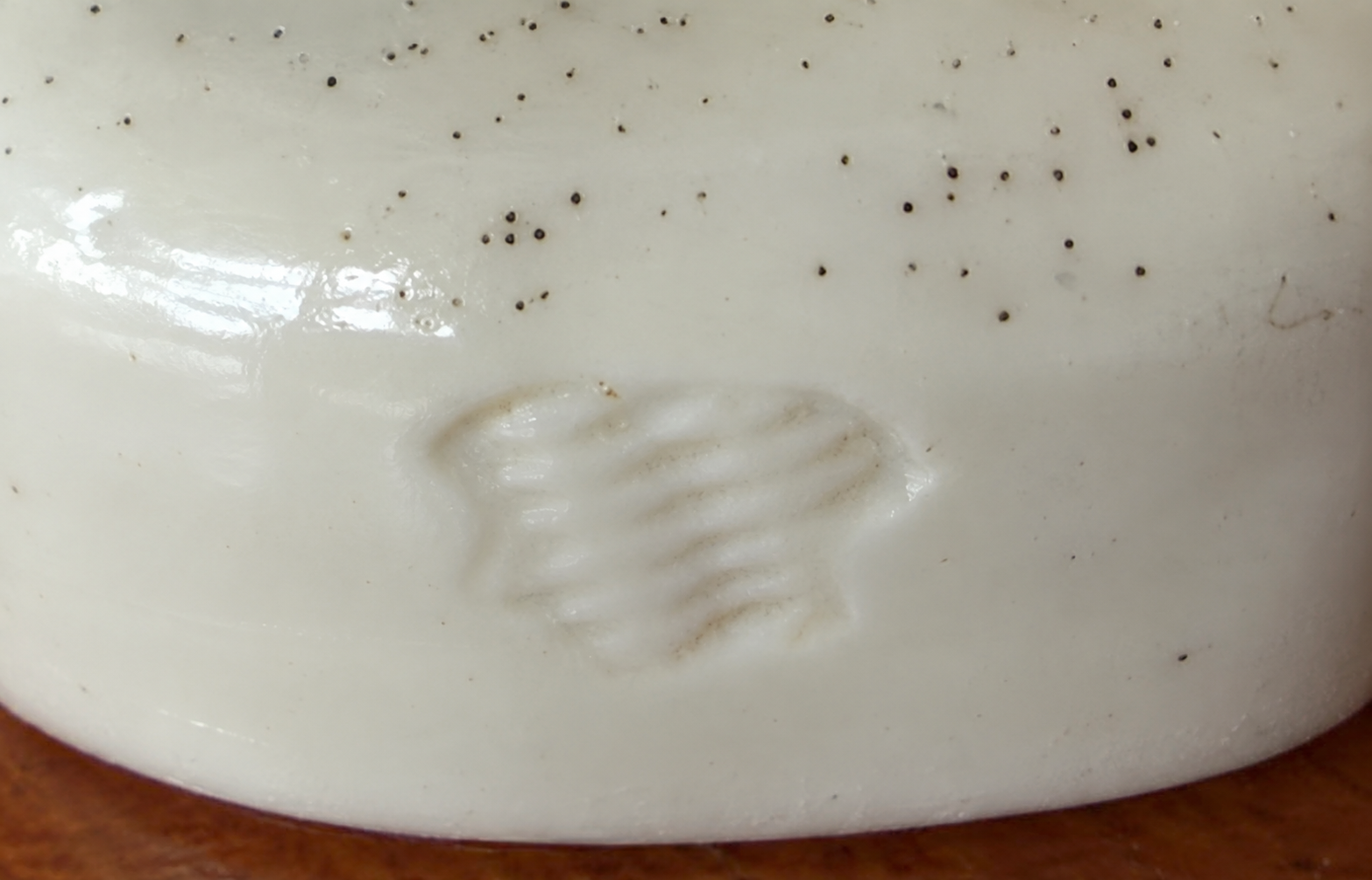
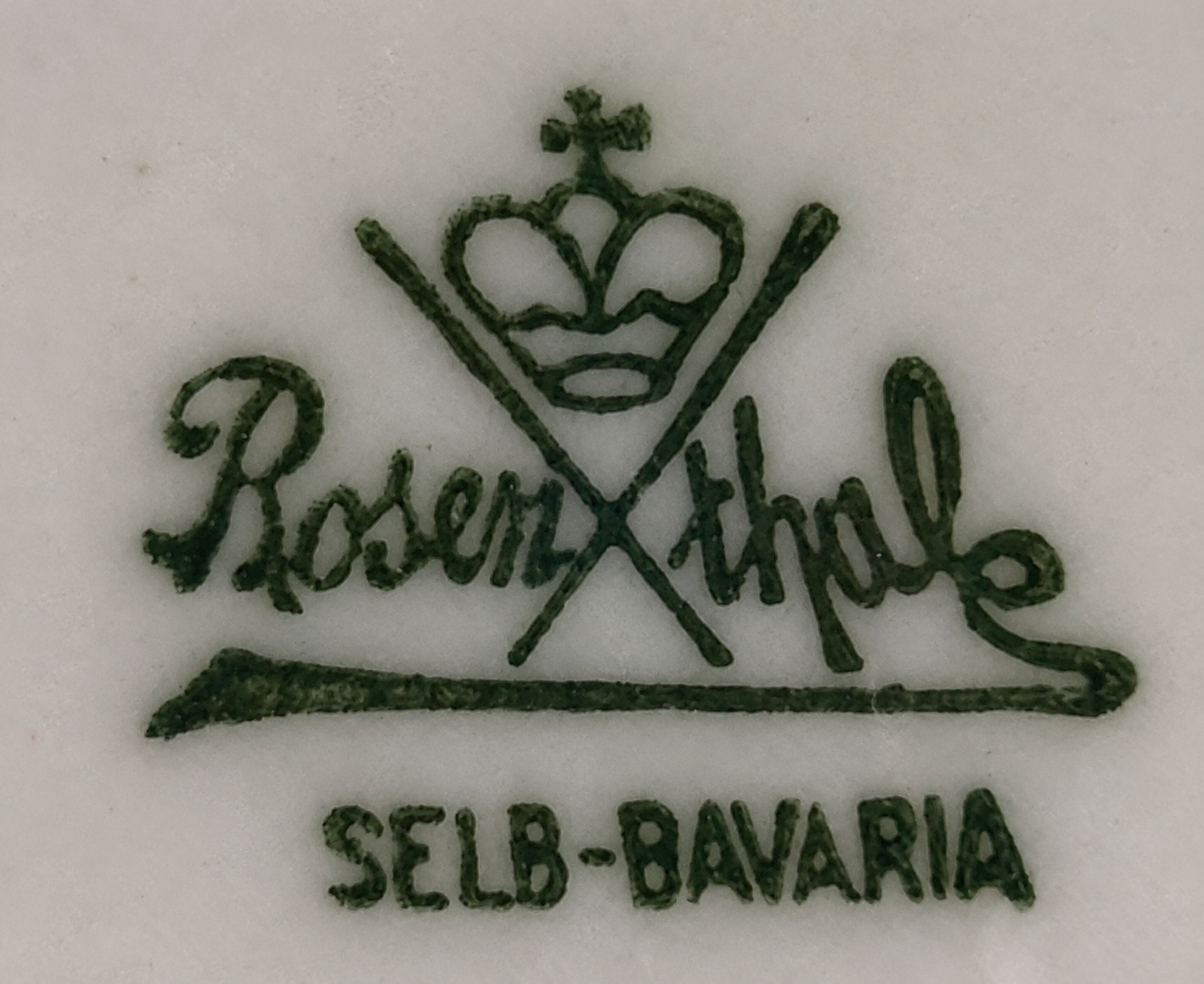
When assessing a porcelain object, it is best to begin not with a famous name alone, but with the object as a whole. A mark may help identify the manufacturer and period, yet it must be considered together with model numbers, impressions, body, glaze, painting style, and the overall quality of the piece.
- Form. Is the modelling precise, are the details expressive, and is the composition balanced?
- Mark. Do its design, colour, and placement correspond with the proposed period of manufacture?
- Condition. Look for restoration, reattached elements, cracks, glaze damage, and worn gilding.
- Rarity. Edition numbers matter, but so do the designer, size, decoration, and how often the model appears on the market.
- Provenance. Invoices, auction records, old labels, and the history of previous owners can add significantly to the story and value of an object.
The finest German porcelain fascinates through more than technical perfection. It preserves the changing relationship between people and beauty: the Baroque desire to astonish, the lightness of the Rococo, the industrial precision of the nineteenth century, and the boldness of twentieth-century design. This diversity allows courtly mythology, the movement of an animal, and modern decorative form to coexist within a single collection.
Sources: the MEISSEN manufactory history archive; the Bavarian Palace Administration’s Nymphenburg Porcelain Museum; the Rosenthal company history archive; the Hutschenreuther history archive; and Porzellanikon, the Bavarian State Museum for Porcelain.