
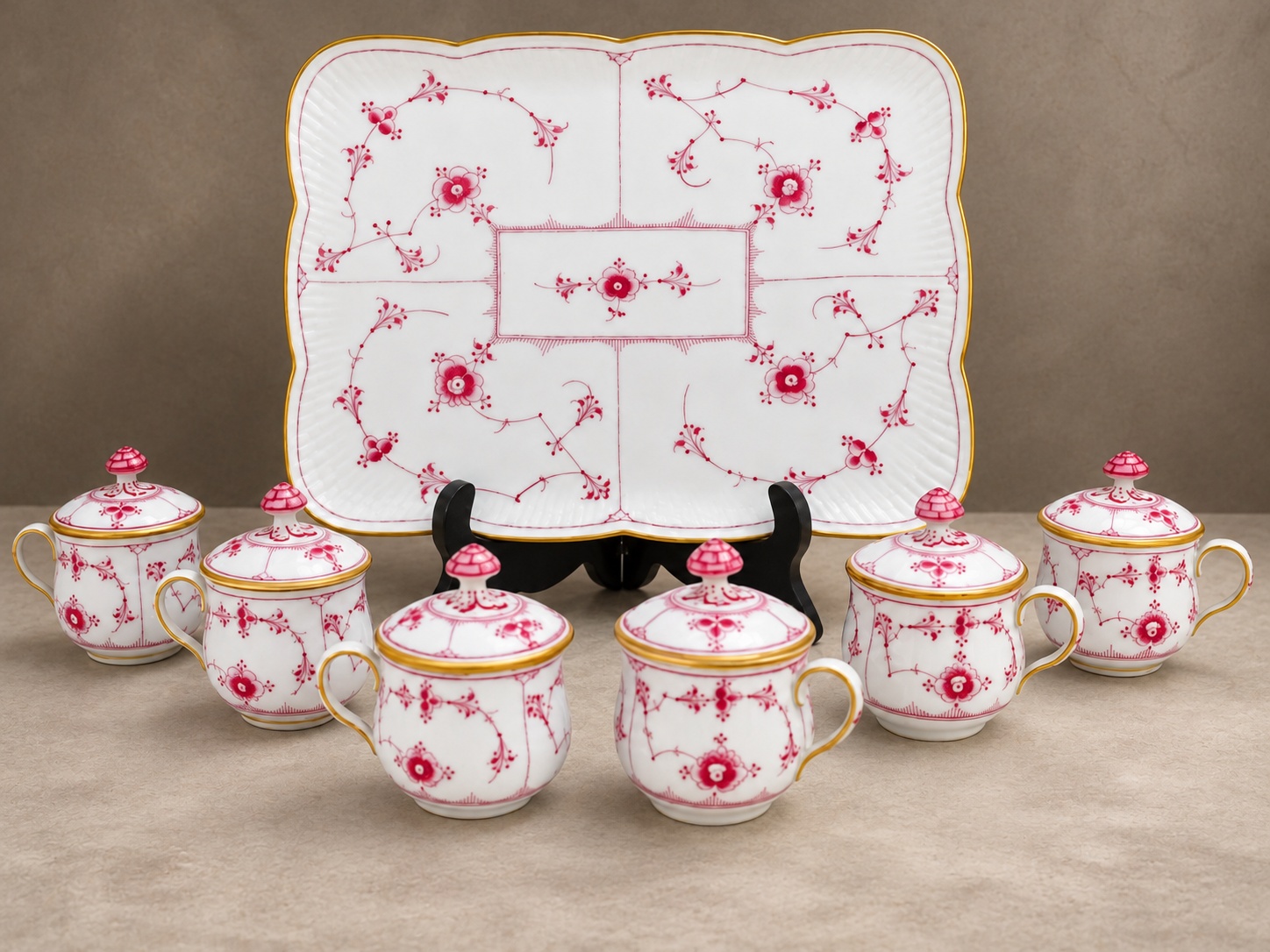
For many centuries, porcelain was more than a material. It reflected power, taste, trade connections and technological mastery. A thin, white and translucent object once seemed almost impossible to make in Europe, which is why porcelain became known as “white gold”.
The Birth of Porcelain in China
The history of porcelain began in China. Its precursors developed over a long period, but white, durable wares fired at high temperatures became more widespread during the Tang dynasty (618–907). Under the Song dynasty (960–1279), porcelain production reached an exceptional level of refinement: not only decoration, but also serene forms, the depth of the glaze and nearly flawless proportions were prized.
Porcelain acquires its defining qualities by combining kaolin with other minerals and firing the mixture at extremely high temperatures. The result is a hard, lightweight and impermeable body that becomes translucent when its walls are thin enough. For centuries, this formula and the precise control of the firing process remained a closely guarded secret of Chinese artisans.
The Art of the Imperial Court
In China, porcelain was inseparable from the imperial court. Pieces were created for palaces, temples, diplomatic exchanges and special ceremonies. Different glazes, colours and symbols carried distinct meanings: the dragon could represent imperial power, the phoenix harmony and renewal, and the lotus purity.
Jingdezhen became an especially important centre. For centuries, workshops and imperial kilns operated there, with artisans specialising in individual stages of production—from preparing the clay to painting and firing. Blue-and-white porcelain, which flourished during the Yuan and Ming dynasties, became one of the most recognisable forms of Chinese art.
The Journey to Europe
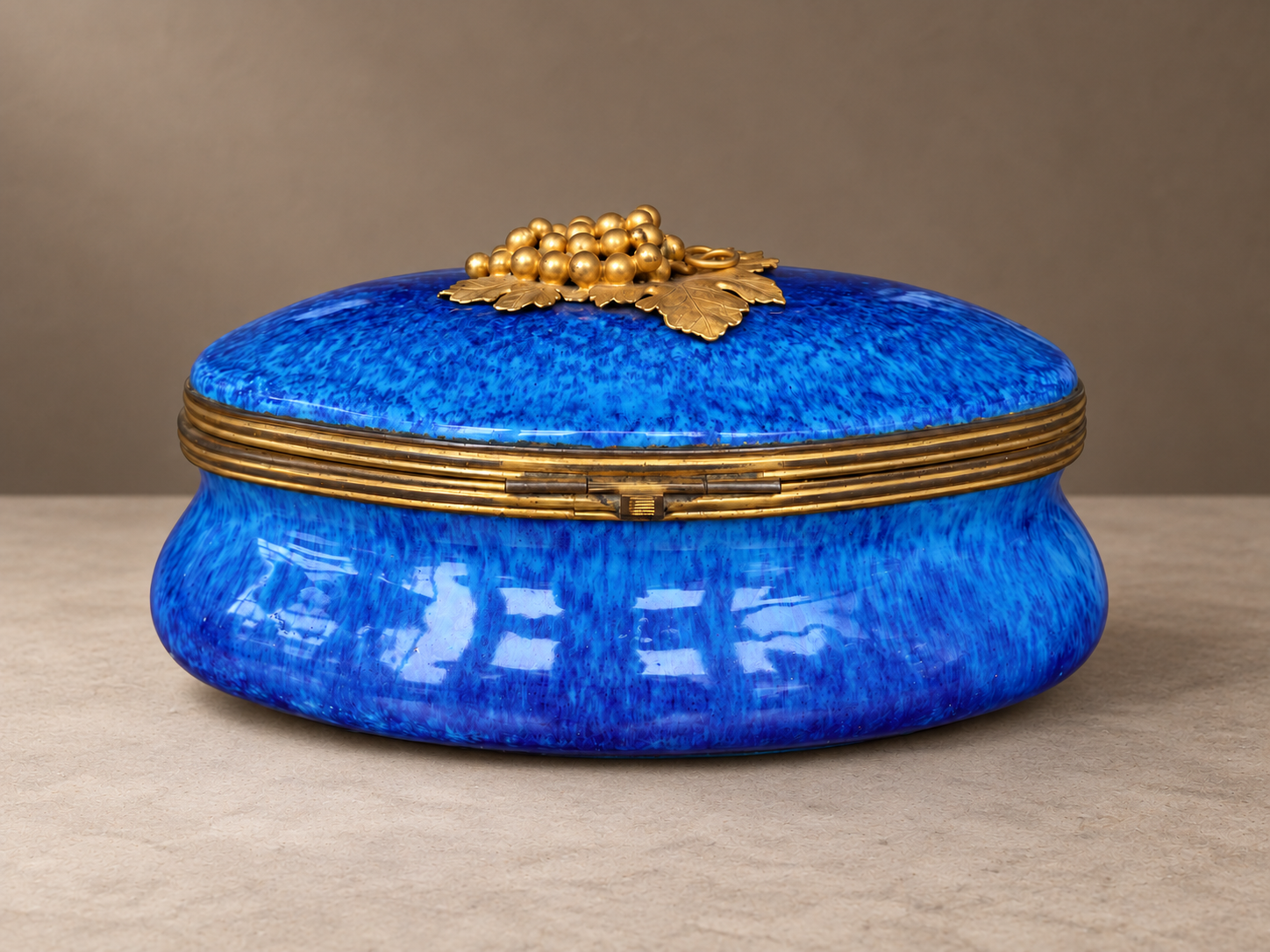
Individual pieces of Chinese porcelain reached Europe as early as the Middle Ages, but larger quantities began to arrive only in the sixteenth and seventeenth centuries as maritime trade expanded. Portuguese merchants, followed by the Dutch East India Company, brought tableware, vases and decorative objects to European ports; their whiteness and resonant tone fascinated royal courts and wealthy collectors.
Porcelain was expensive and therefore became a symbol of status. Rulers assembled entire “porcelain rooms”, while European palaces were decorated with hundreds of Chinese and Japanese pieces. Demand encouraged local potters to imitate their forms and ornament, yet the formula for true hard-paste porcelain remained a mystery.
Europe Unlocks the Secret of Porcelain
European makers developed soft-paste porcelain in an attempt to reproduce the appearance of imported wares. One of the earliest examples was Medici porcelain, produced in Florence in the late sixteenth century. Its composition and properties, however, differed from those of Chinese hard-paste porcelain.
The breakthrough came in Saxony. Through their experiments, Ehrenfried Walther von Tschirnhaus and Johann Friedrich Böttger discovered the right combination of raw materials and high temperatures in the early eighteenth century. Founded in 1710, the Meissen manufactory became the first in Europe to produce hard-paste porcelain successfully.
The Age of the Manufactories
Meiseno sėkmė paskatino porceliano manufaktūrų steigimą throughout Europe. XVIII amžiuje iškilo Vienos, Sèvres, Nymphenburgo ir kitos dirbtuvės, o 1763 metais įkurta Berlyno karališkoji porceliano manufaktūra – KPM. Kiekviena jų kūrė savitą plastikos, tapybos ir dekoro kalbą.
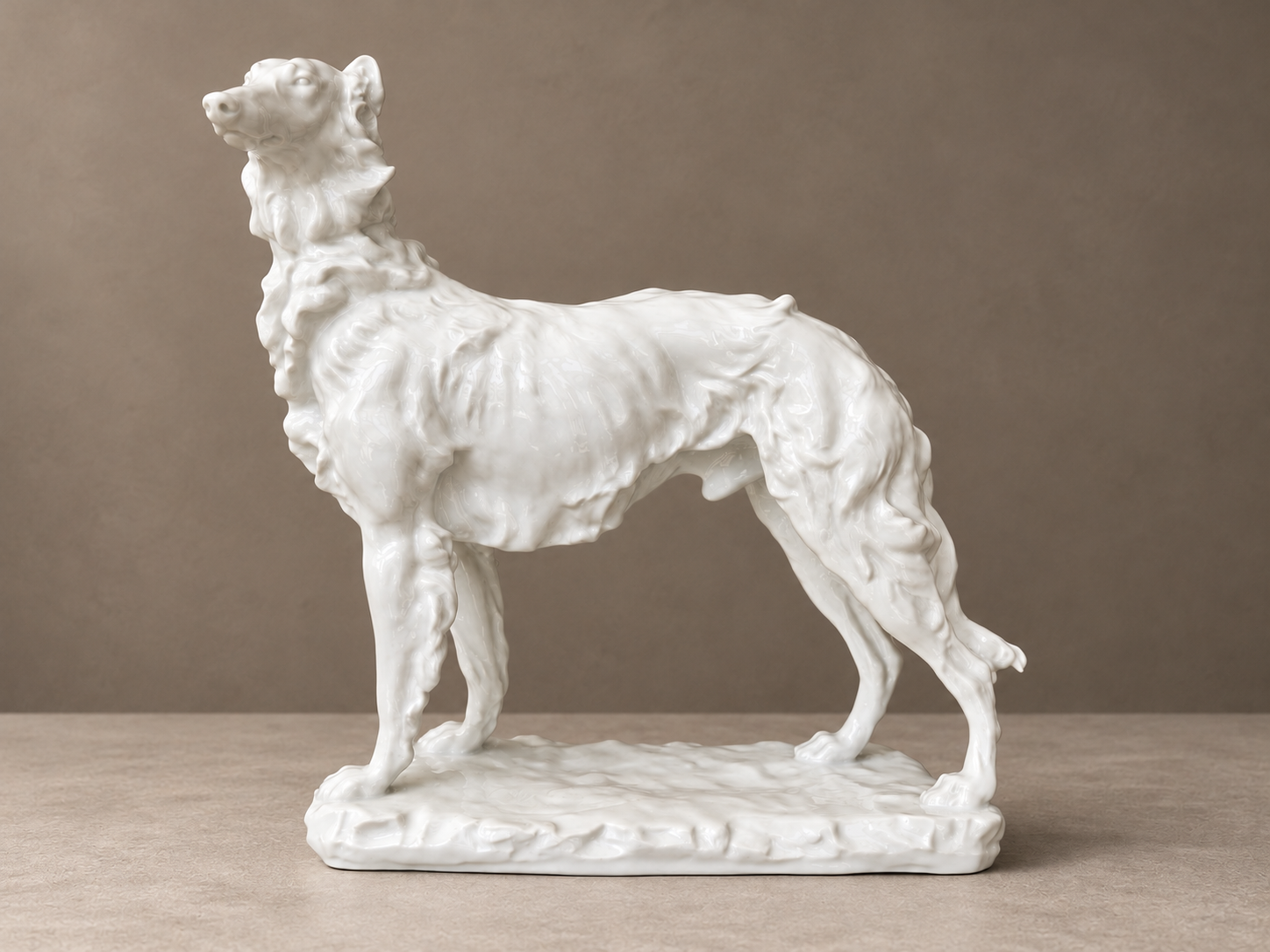
The French manufactory of Sèvres became renowned for its sumptuous coloured grounds, lavish gilding and royal commissions. Meissen gained fame for lively figural compositions, animal sculptures and virtuoso painting. Nymphenburg figures are prized for their elegant modelling, while later manufactories such as Herend extended the European porcelain tradition in their own distinctive ways.
From Tableware to Works of Art
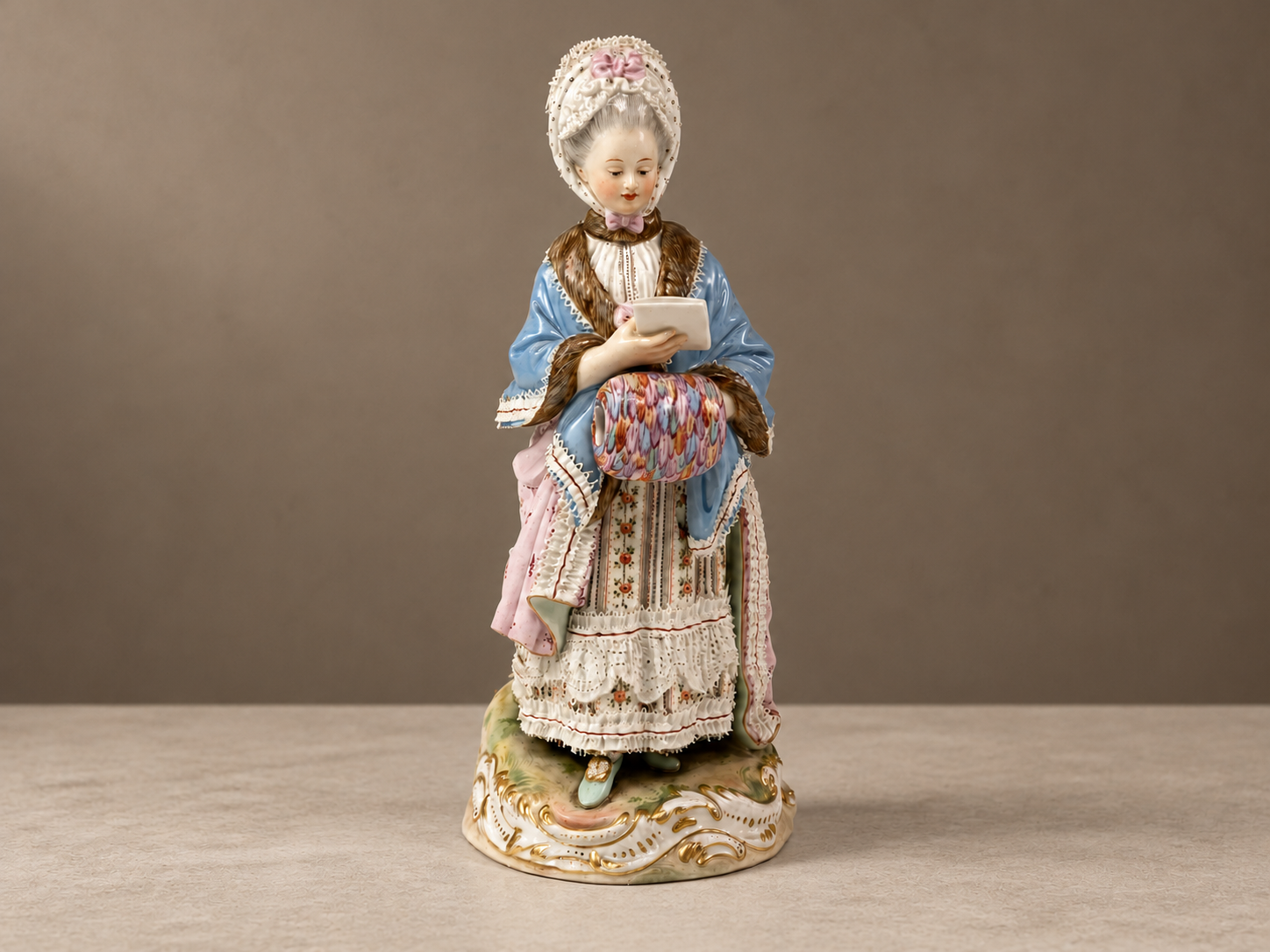
Porcelain soon moved beyond the domestic sphere. It was used not only for services, but also for monumental vases, clock cases, snuffboxes, caskets, animal sculptures and elaborate figural groups. Eighteenth-century works reflected the theatricality of the Rococo; historical styles returned in the nineteenth century, while twentieth-century artists embraced more modern and restrained forms.
When assessing antique porcelain today, the maker’s mark is only one consideration. The modeller, period of production, rarity, quality of execution and condition all matter. Marks changed over time, were copied or supplemented by decorators’ marks, so authenticity must be determined by examining the whole object—the body, glaze, painting, form, base and traces of manufacture.
The value of porcelain lies not only in its fragility or whiteness. Every piece preserves the technology, aesthetics and craftsmanship of its era.
A Living Tradition
From China’s imperial kilns to Europe’s royal manufactories, porcelain travelled across centuries, continents and cultures. Decoration, taste and production methods changed, yet the same fascination endured: a material that could be both strong and almost translucent.
In the RARITUS Journal, we will return to the history of porcelain: exploring individual manufactories, their marks, celebrated modellers and the details worth considering when choosing a collectible piece.