Animals in European art have rarely been mere decorative companions to a painting or sculpture. A lion could signify power, a dog loyalty, a horse nobility and military strength, while a bird might represent the human soul. Yet the same creature acquired very different meanings in different periods.
As the relationship between people and nature changed, so did the animal’s place in art. In the Middle Ages, it was primarily a moral or religious sign. In Renaissance portraits, animals helped describe the sitter and their position in society. During the Baroque period, they became part of a world of power, hunting and exoticism, while in the porcelain manufactories of the eighteenth century they emerged as independent sculptures, valued for the skill of their modelling and the beauty of the material.
Artists of the nineteenth and twentieth centuries went even further: animals began to be represented as individual beings with emotions and character. Over the course of European art history, the animal gradually travelled from symbol to protagonist in its own right.
The Animal as a Sign of the Invisible World
In ancient art, animals were closely connected with gods, myths and forces of nature beyond human control. The eagle accompanied Zeus and Jupiter, the owl was associated with Athena, and dolphins and sea creatures signified the realm of water. Images of animals decorated coins, mosaics, vessels, temples and public monuments.
Early Christianity adopted some of these older images but gave them new meanings. The lamb became a symbol of Christ’s sacrifice, the fish a sign of faith, and the dove an image of the Holy Spirit and peace. The peacock, whose body was once believed not to decay, could signify immortality and resurrection.
Accurate anatomy was not the chief concern in these works. What mattered more was that the sign could be recognised and its meaning understood. A lion might therefore be out of proportion, while a bird’s plumage could bear little resemblance to colours found in nature. The image functioned as a language that contemporary viewers knew how to read.
Medieval Bestiaries: Reality, Faith and Imagination
The animal world became especially rich in medieval manuscripts. Bestiaries described both real and imaginary creatures, interpreting their behaviour as moral lessons. Lions, foxes, pelicans and elephants inhabited their pages alongside griffins, dragons and unicorns.
A bestiary was not a natural history textbook in the modern sense. An animal’s appearance and supposed habits were used to express human virtues, weaknesses or truths of faith. A lion could symbolise Christ and resurrection, yet in another context it could represent a dangerous and uncontrollable force. The fox signified cunning and deceit, while the unicorn evoked purity and a miraculous realm that was difficult for human beings to reach.
Animals appeared in medieval churches as well as in manuscripts. They were carved in stone and wooden choir stalls and represented in stained glass, metalwork and liturgical vessels. Sometimes their purpose was explicitly religious; elsewhere, they simply recalled the colourful, mysterious and dangerous world beyond the walls of the city or monastery.
Renaissance Portraits: What Does an Animal Tell Us About a Person?
During the Renaissance, growing interest in individual personality, observation of nature and portraiture transformed the representation of animals. They became more lifelike without losing their symbolic meanings.
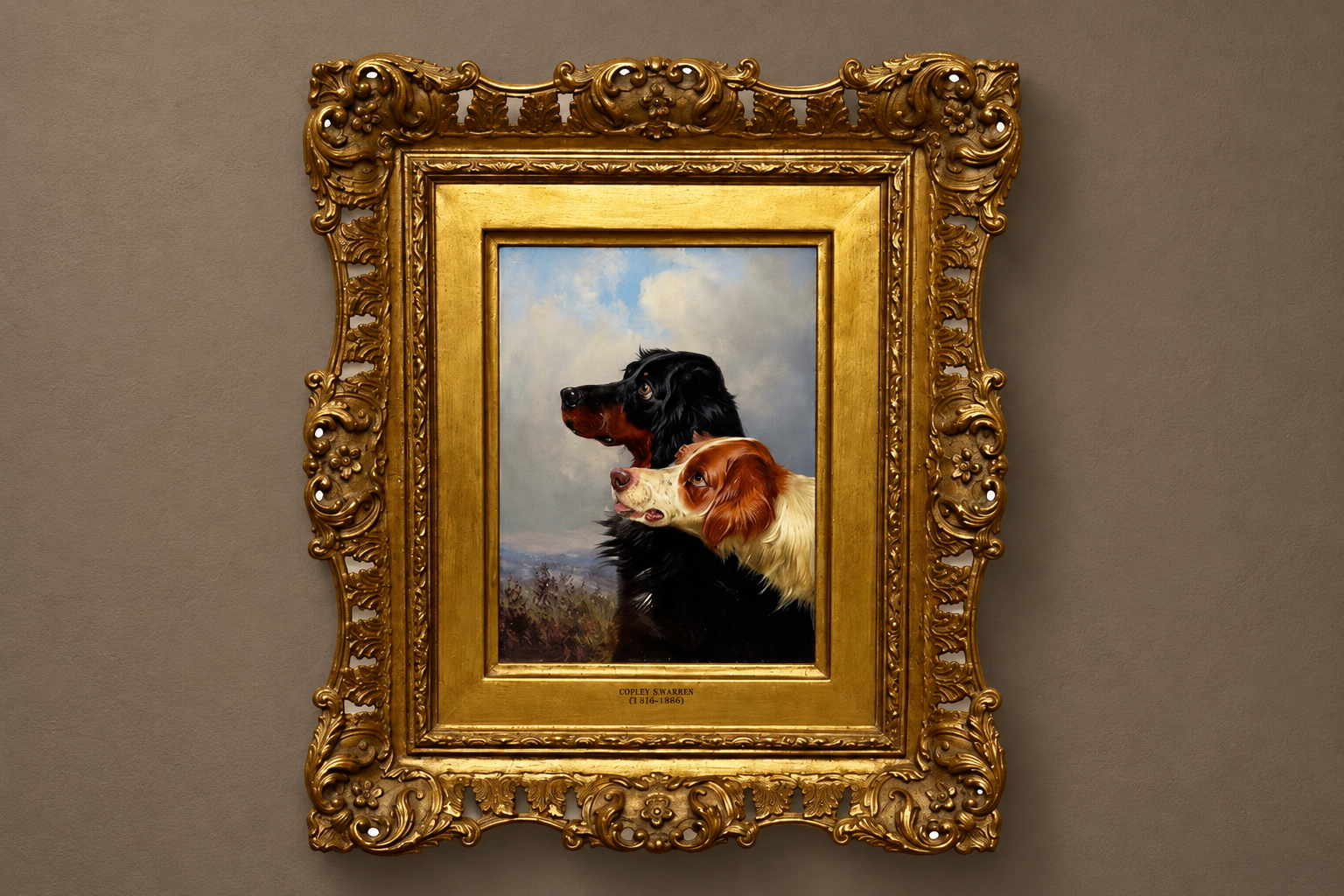
A dog in a portrait could signify fidelity, marital constancy or devotion. A small dog of an expensive breed also revealed its owner’s social position, way of life and ability to keep an animal for companionship rather than work. Hunting dogs referred to aristocratic pursuits, landed estates and the privilege of the hunt.
Birds could represent the soul, freedom, fragility, sacrifice or resurrection. Their meaning depended on the species and the context of the work. The goldfinch, for example, was associated in Christian iconography with the Passion of Christ and redemption.
One of the most famous Renaissance examples of the relationship between a person and an animal is Leonardo da Vinci’s Lady with an Ermine. The animal is not an incidental addition. It is connected with ideas of purity, nobility and courtly culture, while also intensifying the sitter’s animation: the woman and the ermine turn in the same direction, as though both have heard something beyond the picture.
An animal in a portrait could become a second voice in the narrative, revealing what the person could not or chose not to say directly.
The Horse: An Image of Power, Lineage and Movement
Few animals carried as much political meaning in European art as the horse. It was inseparable from the image of the ruler, warrior and aristocrat. In monumental equestrian portraits, the horse’s strength became an extension of the rider’s power.
The ancient tradition of equestrian monuments was revived in Renaissance Italy and later developed throughout European court art. A ruler might be shown on a rearing horse even if he was not celebrated as a horseman. Everyday accuracy mattered less than the impression created: the ability to control a powerful animal implied the ability to govern a state, command an army and master one’s own passions.
In Baroque portraits, the horse’s pose, raised forelegs, flowing mane and elaborate trappings created a theatrical spectacle of authority. By the eighteenth century, however, another way of seeing had emerged. The horse began to be valued not only as an attribute of human status but also as an individual being in its own right.
George Stubbs’s Whistlejacket, painted around 1762, is one of the most striking examples of this shift. The almost life-size racehorse is shown without a rider or a developed landscape. The immense canvas is devoted entirely to its body, movement and character. Aristocratic lineage is expressed not through the figure of a ruler, but through the magnificent animal itself.
Exotic Animals and the European Imagination
Geographical exploration, diplomatic gifts and expanding trade opened Europe to an animal world that had previously been almost unknown. Elephants, lions, monkeys and rhinoceroses brought to royal courts became not only rarities but also signs of political prestige.
Many artists, however, knew exotic creatures not through direct observation but through stories, drawings and other images. Albrecht Dürer’s rhinoceros of 1515 was created without the artist ever seeing the animal alive. Although its skin resembles decorative armour and is not anatomically accurate, the woodcut became one of the most famous animal images in European culture.
The work demonstrates how an artistic image may become more influential than reality. Dürer’s rhinoceros was copied and repeated for centuries, and for a long time this fantastic appearance seemed convincing to European viewers.
The Baroque Hunt: Nature as a Stage for Power
In the European courts of the seventeenth century, hunting was more than entertainment. It functioned as a social ritual, military preparation and a demonstration of authority. Hunting scenes therefore occupied an important place in painting, tapestry, silverwork and palace interiors.
In large compositions, dogs pursued deer or wild boar, horses galloped through forests and hunters appeared in dramatic motion. Such scenes allowed artists to display different materials and surfaces: fur, feathers, leather, metal, foliage and textiles.
The animal often became an object of human power, yet it also gave the composition its tension. Even when defeated by the hunter, a boar or stag embodied a wild force that could never be controlled completely.
A Porcelain Menagerie
In the eighteenth century, animals entered a new artistic world: European porcelain. At first, porcelain was exceptionally rare and expensive on the continent, and discovering the secret of its production became a matter of prestige for rulers.
The Meissen manufactory, founded in 1710, began to produce not only tableware but also complex figural compositions. The sculptor Johann Joachim Kändler was particularly important, creating numerous models of people, birds and animals.
A vast collection of porcelain animals was planned for the Japanese Palace commissioned by the Saxon ruler Augustus the Strong. Meissen’s craftsmen had to recreate animals and birds in porcelain, either life-size or reduced in scale, ranging from dogs and goats to exotic species. The task was extraordinarily difficult: during firing, large porcelain sculptures could distort, crack or lose delicate details.
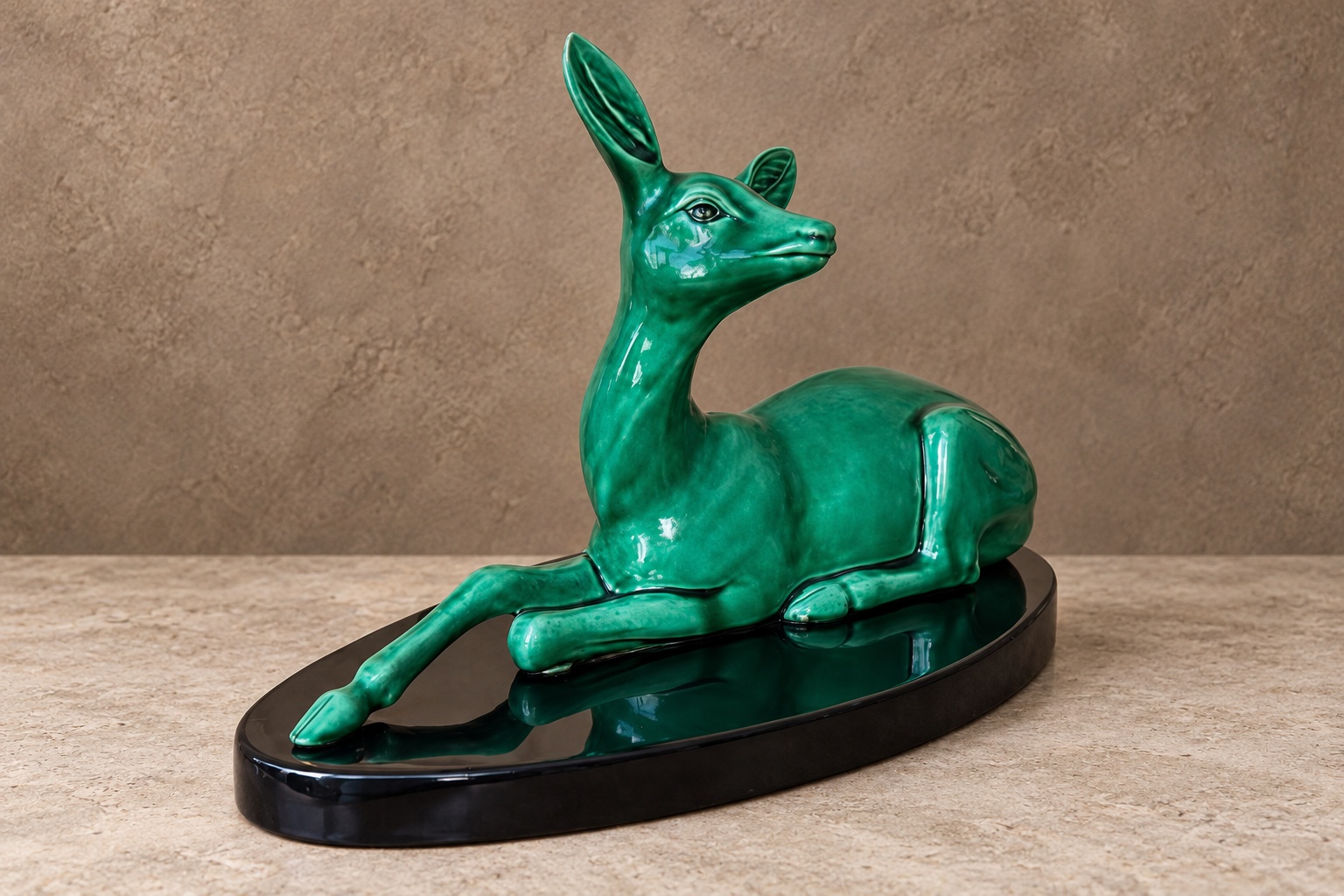
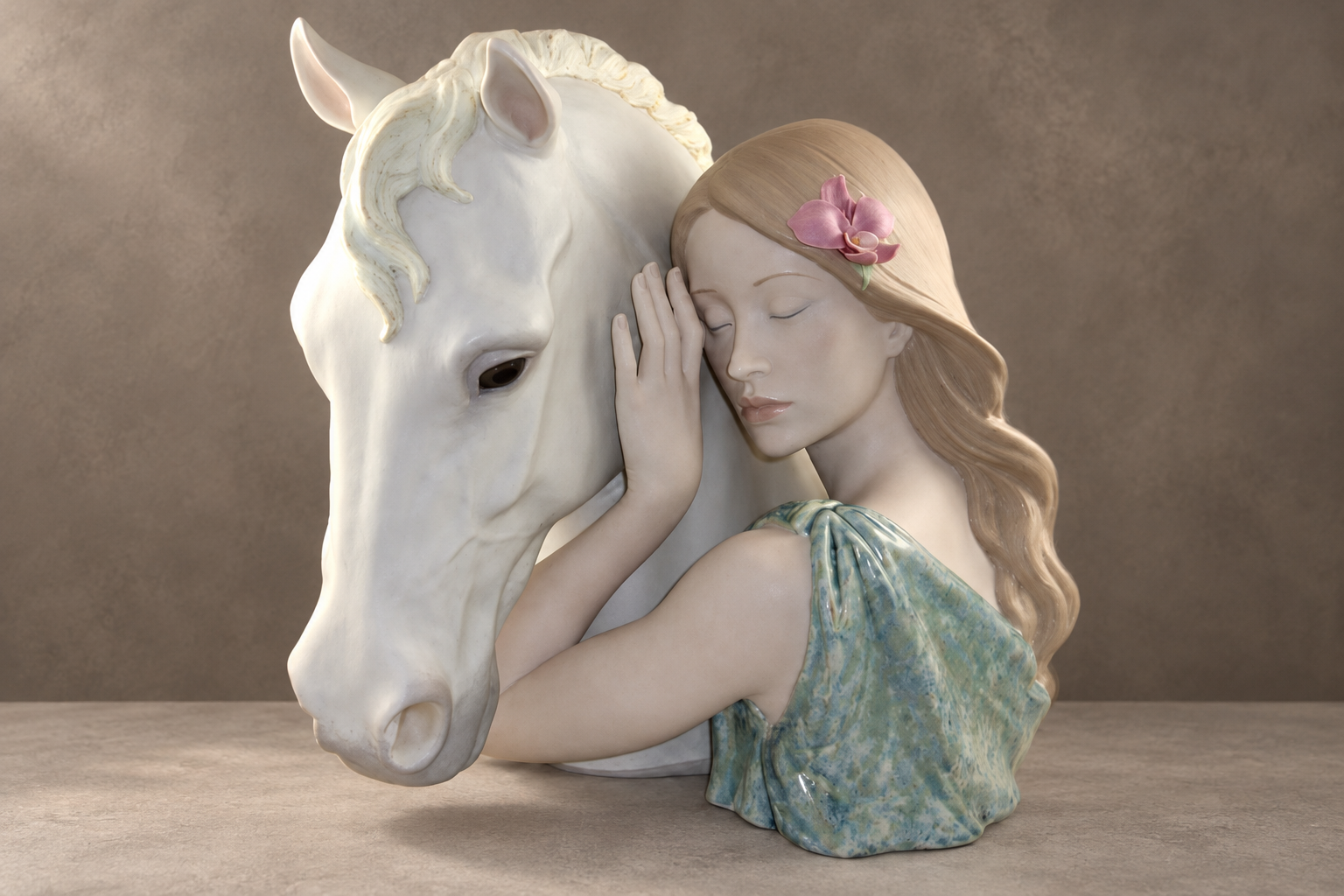
A porcelain animal was valued on several levels. It astonished as a technical achievement, functioned as sculpture and belonged to a luxurious court interior. White, light-reflecting porcelain emphasised the modelling of the body, the texture of fur and feathers, and the impression of movement. Coloured glazes and painted decoration made the figures appear even more lifelike.
Later, animal sculptures were produced by Nymphenburg, Rosenthal and other European manufactories. Some figures were naturalistic; others were stylised according to the aesthetics of their period. Rococo animals often appear graceful and playful, while twentieth-century models may be more restrained, geometric or expressive.
A porcelain animal is therefore more than a representation of a particular species. Its pose, surface and silhouette reveal the era in which the work was created.
The Nineteenth Century: The Animal Acquires Character
During the nineteenth century, observation of nature became increasingly precise, but artists were concerned with more than anatomy. Animals were more often given human emotions and individual personalities.
Edwin Landseer became famous for paintings of dogs, deer and other animals. His dogs may appear proud, sorrowful, courageous or mischievous. The viewer is invited not merely to recognise a breed but to form an emotional connection with the creature represented.
This approach reflected the animal’s changing role in society. As cities and the middle class grew, the domestic animal increasingly became part of family life. Its portrait could preserve a memory just as an image of a person did.
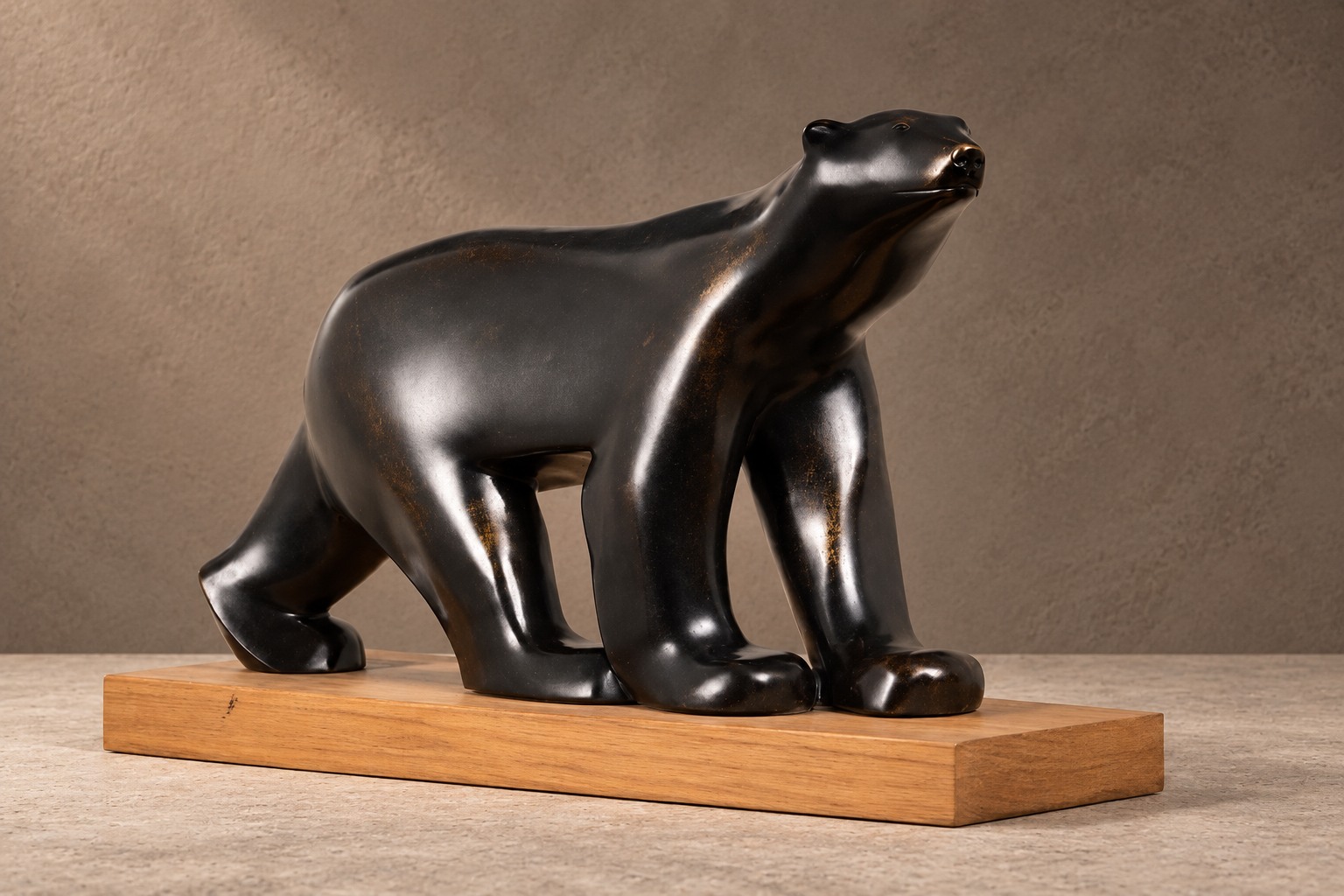
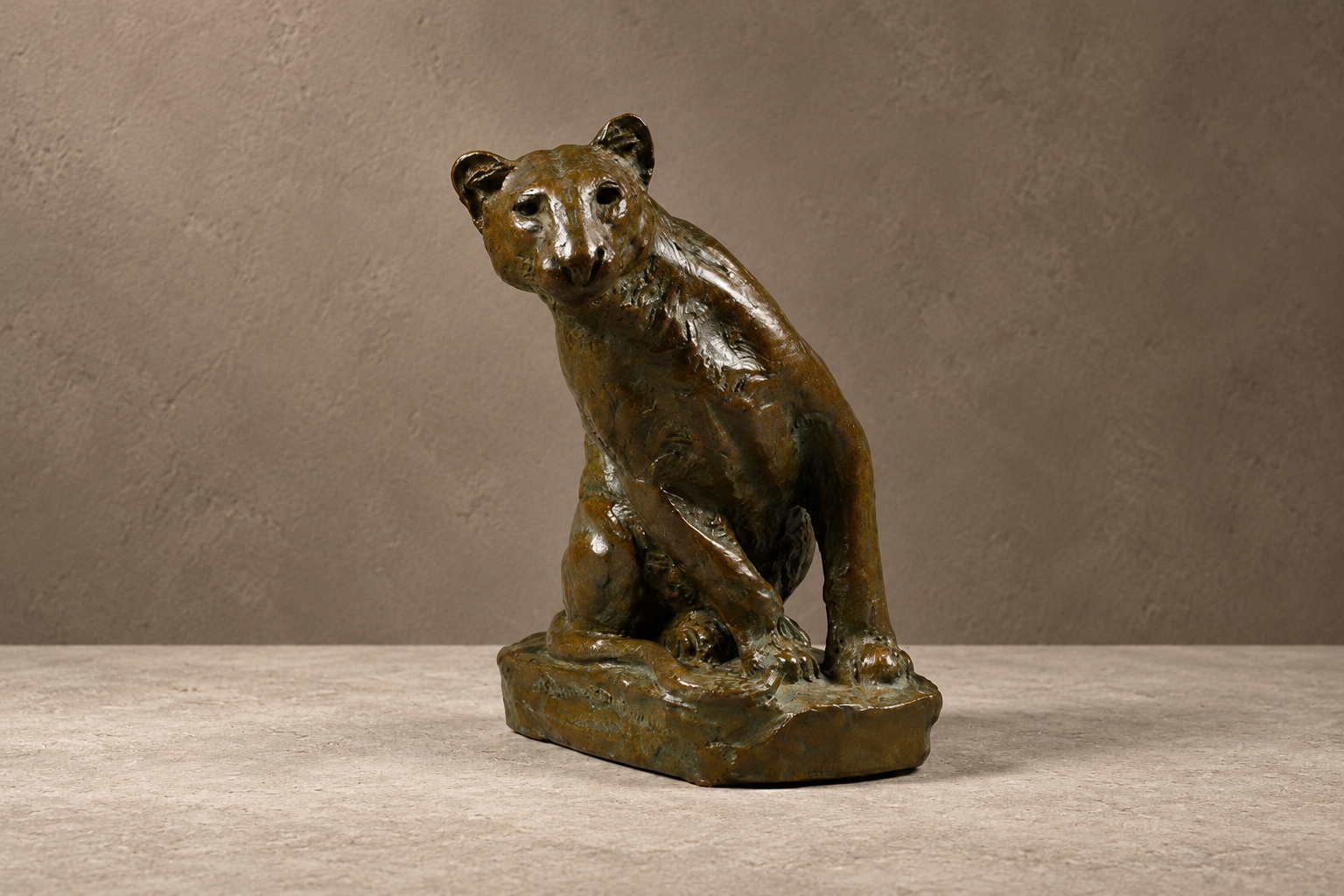
In France, animalier sculptors, for whom animals were the principal subject, gained popularity. Antoine-Louis Barye represented lions, tigers, horses and other creatures in bronze. In his work, careful anatomical observation merged with Romantic drama. Bronze was particularly suited to conveying tense muscles, movement and a sense of untamed power.
Small bronze animal sculptures entered private interiors and collections. A subject that had often belonged to royal courts or monumental art thus became accessible to a wider circle of collectors.
Modernism: Not the Animal’s Appearance, but Its Inner State
At the beginning of the twentieth century, artists moved away from the obligation to reproduce the visible world precisely. The animal became a means of speaking about colour, instinct, anxiety and humanity’s relationship with a modernising environment.
The German Expressionist Franz Marc believed that animals could embody a more sincere and harmonious relationship with the world than human beings. His blue horses, yellow cows and vividly coloured tigers do not reproduce the colours of nature. Colour instead conveys an emotional and spiritual state.
In modernist art, the animal body could be fragmented, simplified or transformed into an almost abstract form. Yet even when strongly stylised, it remained recognisable. People continued to see in animals what they had seen for centuries: strength, fear, freedom, loyalty and mystery.
How Should We Look at an Animal Image?
When encountering an animal in a painting, bronze or porcelain, it is worth considering its role before its species. Is it represented beside a person? Does it obey, protect or act independently? Is the animal individualised, or does it serve as a general sign of power, loyalty or untamed nature?
The material of the work also matters. Bronze can intensify the sense of weight, tension and movement. Porcelain highlights light, fragility, surface modelling and colour. In painting, the animal’s meaning is shaped by its surroundings, scale and relationship to other figures.
A collector should consider the model’s author, the manufactory, marks, period of production and condition. Yet the figure’s expression is artistically important too: is the pose convincing, does the body possess inner tension, and does the silhouette remain alive when seen from different angles?
What Do Animals Tell Us About Ourselves?
Animals constantly changed form in European art, yet they never lost their significance. They guarded temples, accompanied saints and rulers, took part in hunts, signified family loyalty, decorated courtly tables and became independent works of art.
These images do not speak only about animals. They reveal how people understood power, faith, nature, luxury and their own emotions.
Perhaps this is why an animal sculpture or painting can still connect so readily with a viewer today. Even without knowing every historical symbol, we recognise the gaze of an alert dog, the movement of a horse, the fragility of a bird or the power of a wild beast. Through them, art reminds us that human history has never been separate from the animal world.
Principal Sources
- The Metropolitan Museum of Art, Animals in Medieval Art.
- The National Gallery, London, George Stubbs: Whistlejacket.
- The British Museum, collection materials relating to Albrecht Dürer’s rhinoceros drawing and woodcut.
- Smithsonian Institution, materials on the Meissen porcelain rhinoceros and the animal collection created for the Japanese Palace.
- Tate, Expressionists: Kandinsky, Münter and The Blue Rider.