
A maker’s mark may be found on the underside of an old vase, a former owner’s label on its box, or a photograph in a family album showing the same object on a table. Each trace tells a different part of the story. The mark may help establish where and when the object was made; the label and photograph can reveal its life afterwards. That life, known as its provenance or ownership history, can be as compelling to a collector as the object itself.
What Is Provenance?
Museums understand provenance as an object’s journey from its creation: who owned it, where it was kept, and how it passed from one pair of hands to another. An account may include traces of owners, dealers, auctions, exhibitions and publications. A porcelain factory mark speaks first of production, rather than every later owner. An invoice can document one sale, but not the entire journey that came before it.
At first glance, this may look like a dry list of dates. In fact, it changes our relationship with an object. An eighteenth-century plate known only to have been made at a particular factory and an otherwise similar plate preserved with family letters tell stories on different scales. The letters need not make the second plate more beautiful or valuable, but they help us understand how it was used and why it survived.
Small Traces, Larger Questions
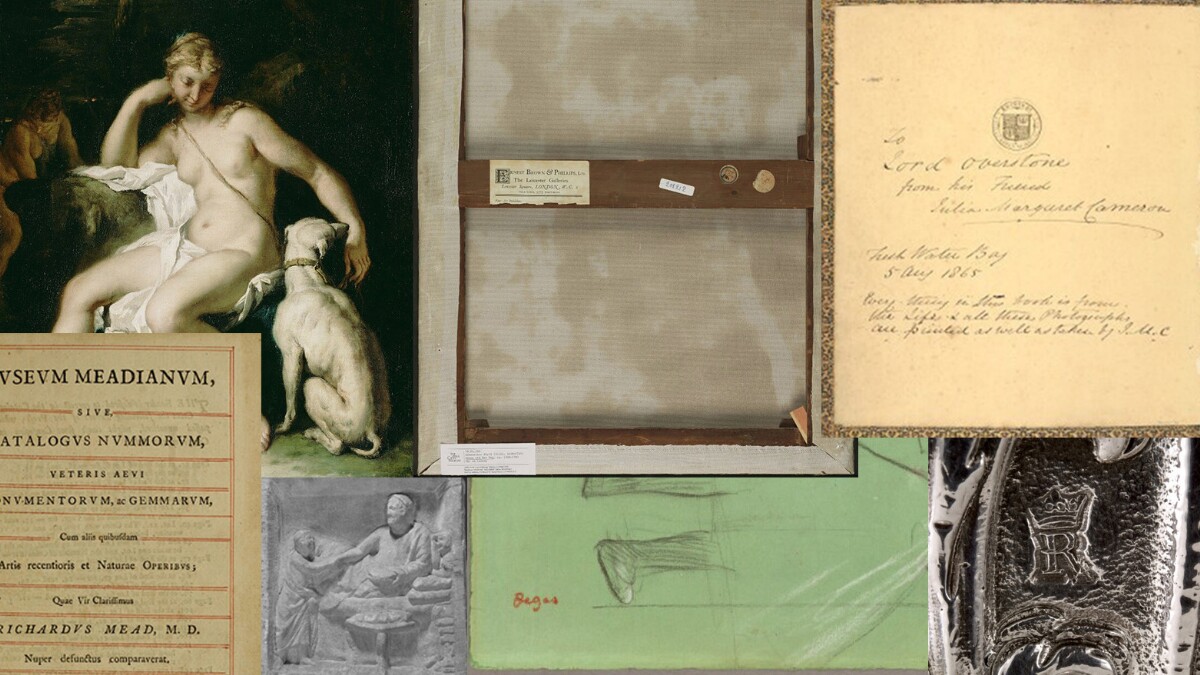
An inventory number written on an object, a gallery label, an exhibition catalogue entry, an old auction description or a photograph can connect separate chapters of its history. The crucial question is whether a source really refers to this particular example. A description such as “porcelain figure” is not enough: many figures may fit it. Dimensions, decoration, the position of a crack, the shape of a base or a small detail visible in an old photograph can help.
Sometimes it is not an elaborate certificate but a simple note on the back of a photograph that offers new information. Such notes still require care. A label attached later may be inaccurate, and a family story may change over generations. That does not mean these accounts should be dismissed. They are worth comparing with evidence that can be checked elsewhere.
Ownership History Can Change How an Object Looks
Provenance records can sometimes explain what we see with our own eyes. An old inventory may mention a pair of vases although only one survives. In an archival photograph, a sculpture may stand on a different base. A restoration record may explain why one area of its surface looks different. The Getty notes that ownership history can help trace changes to an artwork, including restoration, remounting and later additions. This is why old images and descriptions matter alongside the names of owners.
This becomes especially clear when an object was once part of a set. A single cup may now look like an isolated find, while an old photograph shows it among the matching pieces of a service. That knowledge cannot restore the missing pieces, but it changes the question: we are looking beyond one cup to a former ensemble and the story of what survived.
Gaps in the Record
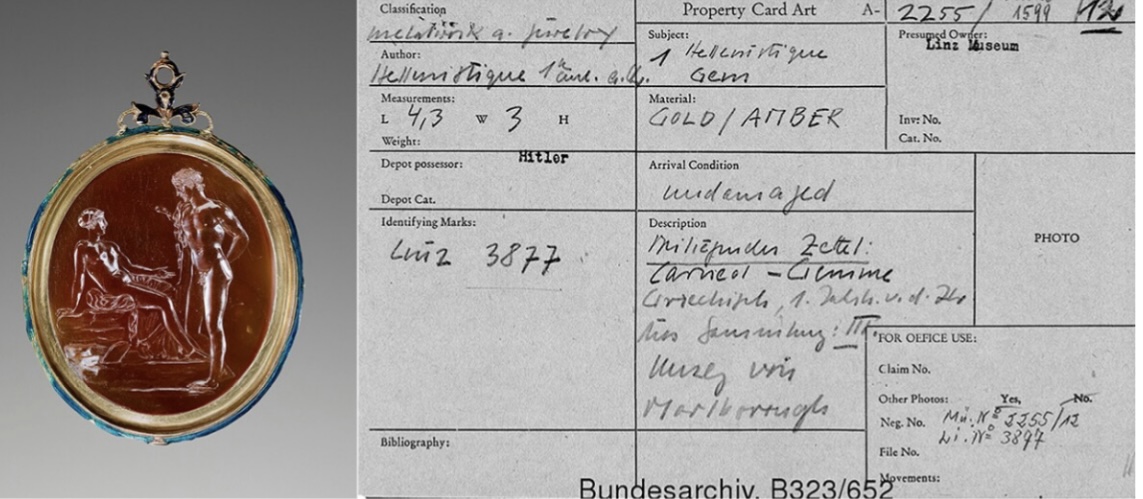
It is not always possible to name every owner of an old object without interruption. Documents are lost, sales were not always recorded, and the history of private collections sometimes remains undisclosed. Researchers at The Met point out that even museum collections contain unexplained periods. “Previous owner unknown” is therefore more honest than a conveniently filled gap.
When the gap occurs matters too. An object’s path through war, forced sales or a colonial context may raise questions that an aesthetic judgement alone cannot answer. In such cases, provenance research helps us understand responsibly how the object arrived where it is today, as well as clarifying dates and names. A missing document is not in itself proof of wrongdoing; nor should what remains uncertain be concealed.
Provenance Is Not the Same as Authenticity
A well-documented history may strengthen an attribution to an artist or workshop, but no document can replace an examination of the object itself. Conversely, a genuine work may have a poorly documented earlier life. Authenticity, condition, attribution and ownership history are related but distinct questions. Conflating them can give too much weight to a single mark or an impressive story.
Suppose an old invoice says “Herend vase”. It shows that something described that way was sold at the time. To connect the invoice with the vase in our hands today, we would need more matching details: its size, decoration, number and perhaps a photograph. Such patient checking is no less compelling than a legend. It allows the story to remain genuinely interesting.
What to Preserve
As a collection grows, its history is being made in the present too. It is useful to keep the purchase record, any earlier description, photographs from different angles, dimensions, images of marks and a short note on what has been established. If some information has been passed on orally, record who told it and when. In the future, this modest file may prove far more useful than a long story that cannot be checked.
An object arrives in a collection with a past, but its journey does not end there. Someone who writes down a few verified lines today and keeps an old label gives the next person a chance to understand more. Sometimes that is how the best collection stories begin.